
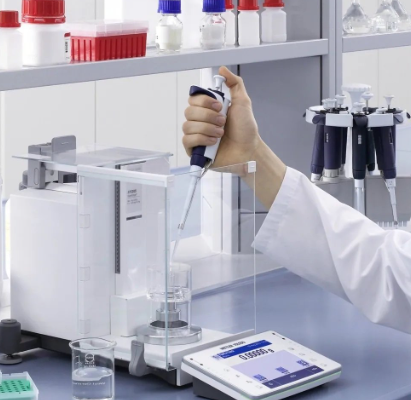
The Importance of Accuracy and Precision in Glassware Lab
When conducting experiments in a laboratory setting, the accuracy and precision of glassware play a crucial role in obtaining reliable results. Glassware such as beakers, flasks, pipettes, and burettes are commonly used for measuring liquids and solutions. Here’s why accuracy and precision are essential:
Accuracy
Accuracy refers to how close a measured value is to the true value. In a glassware lab, accurate measurements are vital for ensuring that experimental results are reliable and reproducible. Using calibrated glassware and following proper measurement techniques can help minimise errors due to inaccuracies.
Precision
Precision, on the other hand, relates to the consistency of repeated measurements. Precise glassware allows researchers to obtain similar results when measuring the same volume multiple times. This consistency is crucial for detecting small changes in experimental outcomes.
Significance of Accuracy and Precision
Both accuracy and precision are essential in scientific research as they impact the validity of conclusions drawn from experiments. Inaccurate measurements can lead to faulty interpretations, while imprecise measurements may result in unreliable data.
Calibration and Maintenance
To ensure the accuracy and precision of glassware, regular calibration and maintenance are necessary. Calibrating glass instruments against known standards helps verify their accuracy, while proper cleaning and storage practices maintain their precision over time.
Conclusion
In conclusion, the accuracy and precision of glassware in a laboratory setting are paramount for obtaining trustworthy results in scientific experiments. By prioritising these factors and adhering to best practices, researchers can enhance the quality and reliability of their work.
6 Essential Tips for Ensuring Accuracy and Precision in Glassware Laboratory Practices
- Always use clean and dry glassware to prevent contamination.
- Handle glassware with care to avoid chipping or breaking, which can affect accuracy.
- Calibrate glassware regularly to ensure measurements are precise.
- Use the appropriate size and type of glassware for the volume and type of substance being measured.
- Read measurements at eye level to avoid parallax errors that can impact accuracy.
- Allow glassware and substances to equilibrate to room temperature before taking measurements for better precision.
Always use clean and dry glassware to prevent contamination.
It is crucial to always use clean and dry glassware in the laboratory to prevent contamination and ensure the accuracy and precision of measurements. Residual substances or moisture left in glassware can introduce errors into experiments, leading to unreliable results. By maintaining cleanliness and dryness in glass instruments, researchers can minimise the risk of cross-contamination and maintain the integrity of their data. Adhering to this simple tip can significantly improve the quality of experimental outcomes in a glassware lab.
Handle glassware with care to avoid chipping or breaking, which can affect accuracy.
Handling glassware with care is a crucial tip to uphold the accuracy and precision of lab measurements. By preventing chipping or breaking of glassware, researchers can maintain the integrity of their instruments and ensure consistent results. Any damage to the glassware can lead to inaccuracies in volume measurements, potentially compromising the reliability of experimental data. Therefore, handling glassware with caution and delicacy is essential in preserving its quality and safeguarding the accuracy of scientific analyses.
Calibrate glassware regularly to ensure measurements are precise.
It is crucial to calibrate glassware regularly in a laboratory setting to maintain precision in measurements. By calibrating glass instruments against known standards on a consistent basis, researchers can verify the accuracy of their measurements and ensure that experimental results are reliable. Regular calibration helps to identify and correct any deviations in measurement accuracy, ultimately enhancing the quality of data obtained from experiments conducted using glassware.
Use the appropriate size and type of glassware for the volume and type of substance being measured.
In a glassware lab, it is crucial to use the appropriate size and type of glassware for the volume and type of substance being measured to ensure accuracy and precision in experimental results. Selecting the right vessel that matches the volume of the liquid being measured helps minimise errors and allows for more reliable readings. Additionally, using glassware designed for specific substances, such as acid-resistant beakers for corrosive solutions, can prevent contamination and maintain the integrity of the experiment. By carefully choosing the correct size and type of glassware, researchers can enhance the quality of their measurements and achieve more accurate outcomes in their scientific investigations.
Read measurements at eye level to avoid parallax errors that can impact accuracy.
Reading measurements at eye level is a crucial tip in maintaining the accuracy and precision of glassware lab experiments. By ensuring that the measurement markings are aligned with the observer’s line of sight, parallax errors can be minimised or eliminated. Parallax errors occur when the scale of the glassware appears shifted due to viewing from an incorrect angle, leading to inaccurate readings. Therefore, adopting the practice of reading measurements at eye level helps to mitigate this source of error and contributes to obtaining reliable and consistent results in laboratory procedures.
Allow glassware and substances to equilibrate to room temperature before taking measurements for better precision.
Allowing glassware and substances to equilibrate to room temperature before taking measurements is a valuable tip that can significantly enhance the precision of lab work. Temperature variations can affect the volume of liquids and solutions, leading to inaccuracies in measurements. By allowing sufficient time for glassware and substances to reach equilibrium with the surrounding environment, researchers can minimise the impact of temperature fluctuations on their results, ensuring more reliable and precise data collection in the laboratory.
I like it when folks get together and share opinions.
Great website, keep it up!
A person necessarily lend a hand to make critically articles I might state.
That is the first time I frequented your website page and so far?
I surprised with the research you made to make this particular publish amazing.
Fantastic job!