
The Importance of Accuracy and Precision in Metrology
Metrology, the science of measurement, plays a crucial role in various industries such as manufacturing, engineering, healthcare, and more. Two key concepts that are fundamental to metrology are accuracy and precision.
Accuracy
Accuracy refers to how close a measured value is to the true value. In metrology, accuracy is essential to ensure that measurements are reliable and trustworthy. A high level of accuracy is crucial in fields such as medicine, where precise measurements can be a matter of life and death.
Precision
Precision, on the other hand, relates to the consistency or repeatability of measurements. A measurement is considered precise if repeated measurements under the same conditions yield similar results. Precision is vital in industries like aerospace and automotive manufacturing, where tight tolerances are required for components to function correctly.
Relationship Between Accuracy and Precision
While accuracy and precision are distinct concepts, they are interrelated. Ideally, measurements should be both accurate and precise. However, it is possible to have measurements that are precise but not accurate (consistent but not close to the true value), or accurate but not precise (close to the true value but with varying results).
Importance in Industry
In industries where quality control is paramount, such as pharmaceuticals or electronics manufacturing, ensuring both accuracy and precision in metrology is essential. Reliable measurements help maintain product quality, improve process efficiency, and reduce waste.
Conclusion
Accuracy and precision are critical aspects of metrology that underpin the reliability of measurements across various industries. By understanding and prioritising these concepts, organisations can enhance their processes, products, and ultimately deliver better outcomes for their customers.
Understanding Accuracy and Precision in Metrology: Key Differences and Their Importance, Improvement Strategies, Influencing Factors, and Measurement Scenarios
- What is the difference between accuracy and precision in metrology?
- Why are accuracy and precision important in metrology?
- How can one improve the accuracy of measurements in metrology?
- What factors can affect the precision of measurements in metrology?
- Can a measurement be accurate but not precise, or vice versa, in metrology?
What is the difference between accuracy and precision in metrology?
In metrology, the difference between accuracy and precision is a common query that arises when discussing measurement principles. Accuracy refers to how close a measured value is to the true or target value, reflecting the reliability and correctness of the measurement. On the other hand, precision relates to the consistency or repeatability of measurements, indicating how closely repeated measurements under the same conditions align with each other. Understanding this distinction is crucial in ensuring that measurements are not only reliable but also consistently reproducible, highlighting the importance of both accuracy and precision in achieving high-quality and trustworthy results in metrology practices.
Why are accuracy and precision important in metrology?
Understanding why accuracy and precision are crucial in metrology is essential for ensuring reliable and trustworthy measurements. Accuracy ensures that measured values closely match the true value, providing a solid foundation for decision-making in various industries. Precision, on the other hand, guarantees consistency and repeatability in measurements, which is vital for maintaining quality standards and meeting strict tolerances. Together, accuracy and precision play a key role in enhancing product quality, process efficiency, and overall customer satisfaction in fields where precise measurements are critical for success.
How can one improve the accuracy of measurements in metrology?
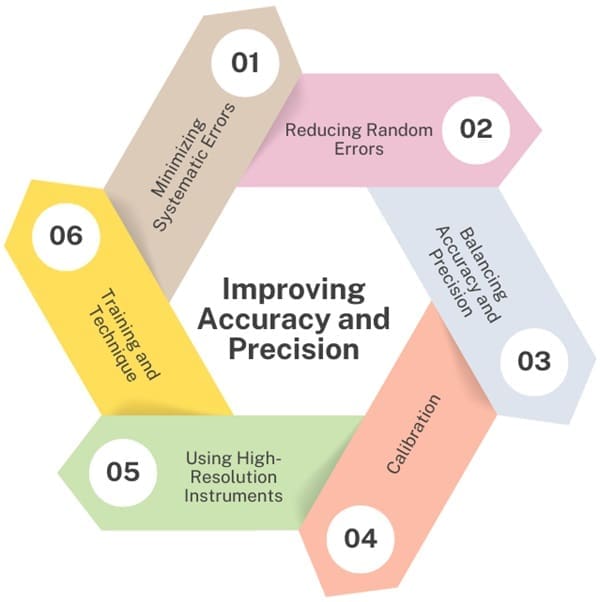
To improve the accuracy of measurements in metrology, several key steps can be taken. Firstly, calibrating measuring instruments regularly is crucial to ensure their accuracy remains consistent. Additionally, using high-quality equipment and following proper measurement techniques can help minimise errors. Conducting multiple measurements and averaging the results can also enhance accuracy by reducing the impact of random errors. Moreover, considering environmental factors that may affect measurements, such as temperature or humidity, and controlling these variables can contribute to more accurate results. Finally, ongoing training and education for personnel involved in metrology practices can help maintain a high level of accuracy in measurements. By implementing these strategies, one can strive towards achieving greater accuracy in metrology processes.
What factors can affect the precision of measurements in metrology?
Various factors can influence the precision of measurements in metrology. Environmental conditions, such as temperature and humidity, can impact the stability of measurement instruments and affect the consistency of results. The quality of equipment used, including calibration standards and measurement tools, plays a significant role in determining precision. Operator skill and technique also contribute to measurement precision, as improper handling or technique can introduce errors. Additionally, factors like sample size, sampling method, and data processing procedures can influence the level of precision achieved in metrology measurements. By addressing these factors systematically and implementing best practices, metrology professionals can enhance the precision of their measurements and ensure reliable and accurate results.
Can a measurement be accurate but not precise, or vice versa, in metrology?
In metrology, it is possible for a measurement to be accurate but not precise, or vice versa. Accuracy refers to how close a measured value is to the true value, while precision relates to the consistency or repeatability of measurements. An accurate measurement means that it is close to the true value, regardless of how consistent the results are. On the other hand, a precise measurement indicates that repeated measurements under the same conditions yield similar results, even if they are not close to the true value. Understanding this distinction is crucial in metrology as it helps ensure that measurements are both reliable and consistent for various applications across different industries.