
Define Precision in Measurement
Precision in measurement refers to the level of consistency and exactness in obtaining a result. It is a crucial concept in various fields such as science, engineering, and manufacturing, where accurate measurements are essential for making informed decisions and ensuring quality.
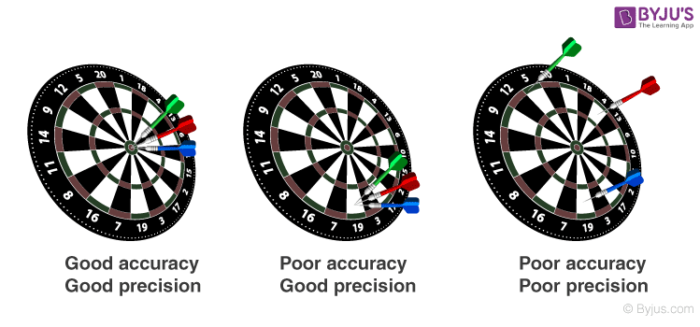
When we talk about precision, we are focusing on how close repeated measurements are to each other. A measurement is considered precise if multiple readings of the same quantity yield similar results. In other words, precision reflects the degree of repeatability or reproducibility in obtaining a measurement.
It’s important to distinguish between precision and accuracy. While precision relates to the consistency of measurements, accuracy refers to how close a measurement is to the true value. A measurement can be precise but not accurate if it consistently misses the actual value by the same amount.
Various factors can affect the precision of measurements, including instrument calibration, environmental conditions, human error, and statistical variations. By understanding these factors and taking appropriate measures to minimise errors, we can improve the precision of our measurements.
In scientific experiments and research studies, precise measurements are crucial for drawing valid conclusions and establishing reliable data. Researchers often use statistical analysis to assess the precision of their results and determine the significance of any variations observed.
In summary, precision in measurement is about achieving consistent and reliable results through careful attention to detail, proper calibration of instruments, and rigorous data analysis. By striving for precision in our measurements, we can enhance the quality and reliability of our work across various disciplines.
The Importance of Precision in Measurement: Ensuring Consistency, Reliability, and Quality
- Precision ensures consistency in measurement results.
- Accurate and precise measurements lead to reliable data analysis.
- Precision helps identify small variations or changes in a measurement.
- High precision reduces the likelihood of errors and uncertainties.
- Precise measurements are essential for quality control in manufacturing processes.
- Precision enables scientists to draw valid conclusions from research experiments.
- Understanding precision enhances the overall reliability of measurement techniques.
Challenges of Prioritising Precision in Measurement: Cost, Training, Accuracy, and Practicality
- High precision measurement equipment can be costly, making it inaccessible for some individuals or organisations with budget constraints.
- Achieving high precision in measurements may require specialised training and expertise, which can be time-consuming and resource-intensive.
- Overemphasising precision in measurements can sometimes lead to overlooking other important factors such as accuracy, resulting in misleading conclusions.
- In certain situations, striving for extreme precision may not be necessary or practical, leading to unnecessary complexity and inefficiency.
Precision ensures consistency in measurement results.
Precision in measurement offers the invaluable benefit of ensuring consistency in measurement results. By maintaining a high level of precision, we can rely on the repeatability and reproducibility of our measurements. This consistency is essential in various fields, such as scientific research, engineering, and manufacturing, where accurate and dependable data is crucial for making informed decisions and achieving desired outcomes. When measurements are precise, we can have confidence in the reliability of our results, leading to increased trust in the data and enabling us to draw meaningful conclusions with certainty.
Accurate and precise measurements lead to reliable data analysis.
Accurate and precise measurements play a fundamental role in ensuring reliable data analysis. When measurements are both accurate and precise, researchers can have confidence in the consistency and repeatability of their results. By obtaining precise measurements, any variations or trends in the data can be identified with greater clarity, allowing for more accurate interpretations and conclusions to be drawn. This reliability in data analysis is essential for making informed decisions, drawing valid scientific conclusions, and driving progress in various fields of study and industry.
Precision helps identify small variations or changes in a measurement.
Precision in measurement plays a crucial role in identifying small variations or changes in a measurement. By ensuring that repeated measurements yield consistent results, precision allows us to detect even the slightest differences with accuracy and confidence. This level of detail is essential in various fields, such as scientific research, quality control in manufacturing, and data analysis, where detecting subtle changes can lead to significant insights and improvements. The ability to pinpoint small variations through precision empowers us to make informed decisions, identify trends, and monitor changes effectively.
High precision reduces the likelihood of errors and uncertainties.
High precision in measurement significantly reduces the likelihood of errors and uncertainties. When measurements are consistently close to each other, it indicates a high level of repeatability and reproducibility, leading to more reliable and trustworthy results. By minimising variations and discrepancies in measurements, high precision enhances the accuracy of data analysis and decision-making processes. Researchers, scientists, and professionals rely on precision in measurement to ensure that their findings are robust, valid, and free from significant errors or uncertainties. Ultimately, the pursuit of high precision plays a crucial role in improving the quality and integrity of scientific research, engineering projects, manufacturing processes, and various other applications that depend on accurate measurements.
Precise measurements are essential for quality control in manufacturing processes.
Precise measurements play a critical role in quality control within manufacturing processes. By ensuring that measurements are accurate and consistent, manufacturers can maintain high standards of product quality and performance. Precise measurements enable manufacturers to detect even the smallest deviations from desired specifications, allowing them to identify and address potential issues before they impact the final product. This attention to precision not only enhances the overall quality of manufactured goods but also helps to increase efficiency, reduce waste, and ultimately improve customer satisfaction. In the competitive manufacturing industry, precision in measurement is a key factor in ensuring that products meet stringent standards and comply with regulatory requirements.
Precision enables scientists to draw valid conclusions from research experiments.
Precision in measurement plays a crucial role in enabling scientists to draw valid conclusions from research experiments. By ensuring that measurements are consistent and reproducible, precision allows researchers to have confidence in the reliability of their data. When the results of an experiment are precise, scientists can more accurately identify patterns, trends, and relationships within the data, leading to sound interpretations and meaningful conclusions. Ultimately, precision enhances the credibility and validity of scientific research by providing a solid foundation for drawing accurate insights and advancing knowledge in various fields.
Understanding precision enhances the overall reliability of measurement techniques.
Understanding precision in measurement enhances the overall reliability of measurement techniques by ensuring that the results obtained are consistent and reproducible. When measurements are precise, researchers and professionals can have greater confidence in the accuracy of their data, leading to more reliable conclusions and decisions. By paying attention to precision, practitioners can minimise errors and variations in measurements, ultimately improving the quality and trustworthiness of their work. In fields where precise measurements are critical, such as scientific research and engineering, a focus on precision is essential for advancing knowledge and achieving meaningful outcomes.
High precision measurement equipment can be costly, making it inaccessible for some individuals or organisations with budget constraints.
High precision measurement equipment can be a significant drawback when considering the concept of precision in measurement. The cost associated with acquiring and maintaining such sophisticated tools can pose a barrier to access for individuals or organisations operating on limited budgets. This financial constraint may prevent certain stakeholders from obtaining the level of precision required for their work, potentially compromising the quality and accuracy of their measurements. As a result, the exclusivity of high precision equipment due to its cost implications can hinder progress and innovation in fields where precise measurements are essential.
Achieving high precision in measurements may require specialised training and expertise, which can be time-consuming and resource-intensive.
Achieving high precision in measurements can be a challenging endeavour due to the specialised training and expertise required. This process often demands a significant investment of time and resources to develop the necessary skills and knowledge. Professionals in fields such as science, engineering, and manufacturing may need to undergo extensive training to master the techniques and tools essential for precise measurements. Moreover, maintaining a high level of precision over time necessitates continuous learning and proficiency, adding to the complexity of the task. The commitment needed to acquire and sustain this level of expertise can be a significant drawback for individuals or organisations seeking to achieve precision in their measurements.
Overemphasising precision in measurements can sometimes lead to overlooking other important factors such as accuracy, resulting in misleading conclusions.
Overemphasising precision in measurements can sometimes lead to overlooking other important factors such as accuracy, resulting in misleading conclusions. While precision is crucial for ensuring consistency and repeatability in measurements, it is equally important to consider accuracy, which reflects how close a measurement is to the true value. Focusing solely on precision may give a false sense of confidence in the results if they are consistently off-target. Therefore, it is essential to strike a balance between precision and accuracy to obtain reliable and meaningful data that can support valid conclusions and informed decision-making.
In certain situations, striving for extreme precision may not be necessary or practical, leading to unnecessary complexity and inefficiency.
In certain scenarios, the pursuit of extreme precision in measurement may prove to be a disadvantage rather than an advantage. Striving for excessive precision can introduce unnecessary complexity and inefficiency, especially when the level of accuracy required does not justify the additional time, resources, and effort invested. In some practical applications, a certain degree of precision is sufficient to achieve the desired outcome without needing to push for absolute perfection. Therefore, it is essential to strike a balance between precision and practicality to ensure that measurements are meaningful and effective in addressing the intended purpose.