
Community Collaboration: Meaning, Benefits and Examples
Community collaboration means people working together to address shared needs, achieve common goals or improve the place and society they belong to. It brings residents, community groups, charities, businesses and public services together to share knowledge, skills and resources.
Rather than relying on one organisation or individual to solve a problem alone, community collaboration encourages people to contribute what they can and make decisions together. It can happen in a neighbourhood, online group, school, workplace or wider local area.
What does community collaboration involve?
Effective collaboration is more than simply bringing people into the same room. It involves listening to different perspectives, agreeing on what needs to be done and sharing responsibility for taking action. Participants might contribute their time, expertise, funding, facilities or understanding of local needs.
For example, residents may work with a council, local businesses and a charity to improve a neglected public space. The community can identify what the area needs, while each partner contributes resources or practical support.
Why is community collaboration important?
People who live or work in a community often understand its challenges and strengths first-hand. Involving them in planning and decisions can help create solutions that are relevant, practical and more likely to last.
- Shared knowledge: Different experiences and expertise can lead to better-informed decisions.
- Stronger relationships: Working towards a common goal can build trust between residents and organisations.
- More effective use of resources: Partners can share skills, facilities, funding and contacts.
- A greater sense of belonging: Taking part can help people feel connected to their community.
- Long-term impact: When people have a role in shaping a project, they may be more likely to support and maintain it.
Examples of community collaboration
Community collaboration can take many forms, from small local initiatives to large partnerships. Examples include:
- Residents and local organisations creating a community garden.
- Schools, families and health services working together to support children’s wellbeing.
- Local businesses and charities organising a food bank or community pantry.
- Residents sharing ideas with a council about safer streets or improved public transport.
- Volunteers and community groups organising a local clean-up or cultural event.
- Online communities sharing advice, resources and support around a common interest.
How to encourage successful collaboration
Good collaboration begins with a clear purpose. Partners need to understand the issue they are addressing and agree on what success would look like. It is also important to include people who are directly affected, not only those who already have the time or confidence to take part.
Trust grows when people listen to one another, communicate openly and follow through on agreed actions. Responsibilities should be clear, and decisions should be explained. Making meetings accessible, offering different ways to contribute and recognising people’s efforts can also help more members of the community get involved.
Common challenges
Collaboration can take time. Partners may have different priorities, limited resources or different ideas about how to reach a goal. Some people may also feel that their views are not being heard. These challenges can be addressed by setting shared expectations, being transparent about decisions and making space for honest discussion.
It is equally important to avoid placing too much responsibility on volunteers or assuming that everyone can contribute in the same way. A fair approach recognises different circumstances and makes participation as inclusive as possible.
In summary
Community collaboration is the process of people and organisations working together for the benefit of a shared community. By combining local knowledge, skills and resources, collaborators can develop more inclusive solutions and build stronger connections. At its heart, community collaboration means listening, sharing responsibility and taking action together.
Community Collaboration Explained: 8 Frequently Asked Questions
- What are the four types of collaboration?
- What collaboration means examples?
- What are the benefits of collaboration in community?
- What is an example of community collaboration?
- What are the 5 C’s of community engagement?
- What does collaboration mean in simple words?
- What is a good example of collaboration?
- What is the true meaning of collaboration?
What are the four types of collaboration?
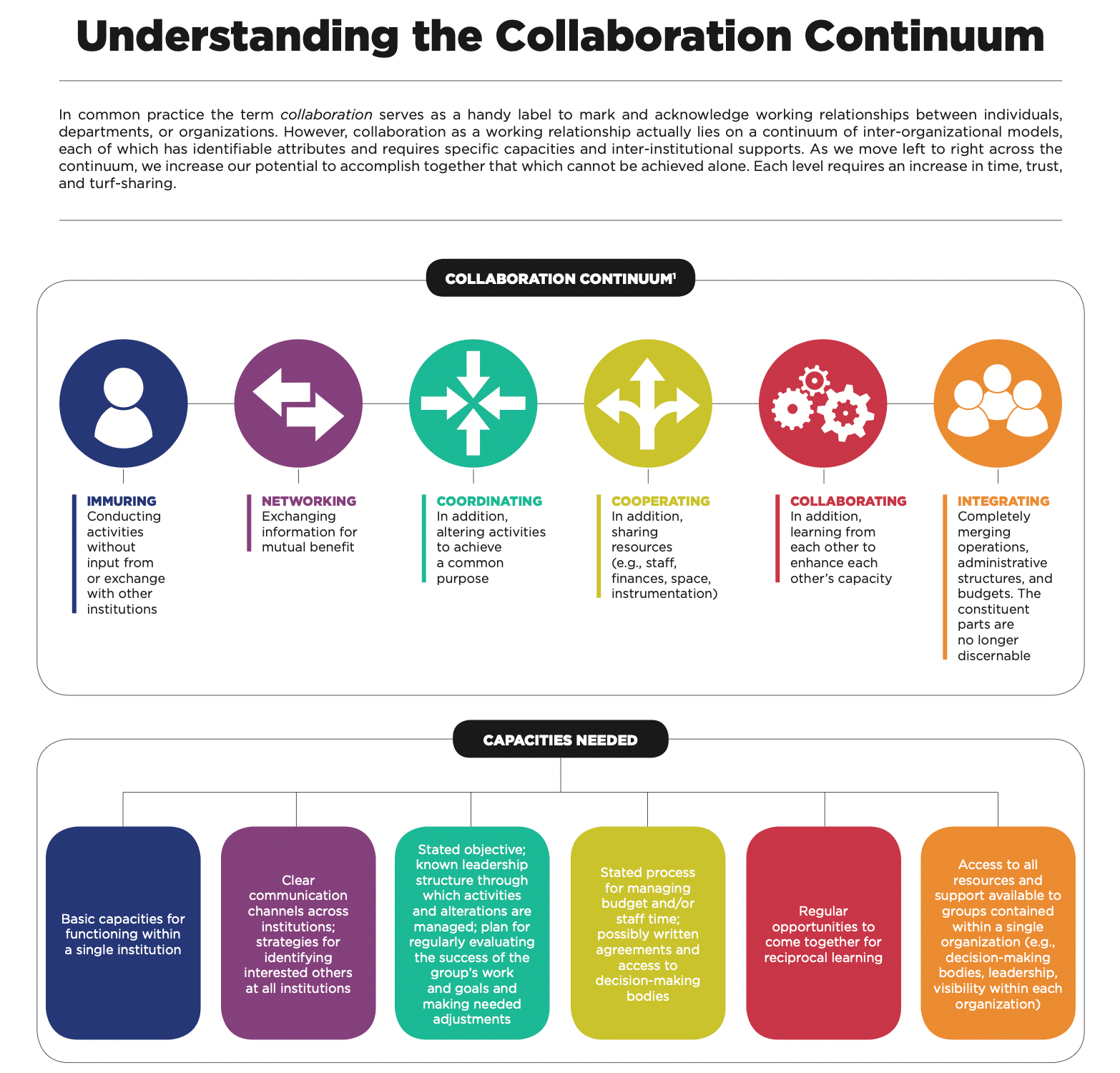
There is no single, universally accepted list of four collaboration types, but community work commonly involves **team collaboration**, where a small group works towards a shared task; **cross-sector collaboration**, where organisations such as councils, charities and businesses combine their expertise; **network collaboration**, where people and groups share information and support while remaining independent; and **coalition collaboration**, where partners formally join forces around a specific issue or goal. These approaches can overlap, and the most suitable one depends on the community’s needs and the people involved.
What collaboration means examples?
Collaboration means working with others towards a shared goal by exchanging ideas, skills or resources and sharing responsibility. For example, residents might work with a local council and charity to improve a park, or a school might partner with families and health professionals to support pupils’ wellbeing. In both cases, each group contributes its knowledge and effort to achieve something they could not accomplish as effectively alone.
What are the benefits of collaboration in community?
The benefits of collaboration in a community include bringing together different skills, experiences and ideas to tackle shared challenges more effectively. Working together can help people make better-informed decisions, share resources, build trust and strengthen relationships between residents and local organisations. It can also create a greater sense of belonging, ensure that projects reflect local needs and encourage people to take shared responsibility for lasting improvements.
What is an example of community collaboration?
An example of community collaboration is residents working with a local council, school and charity to create a safe, welcoming community garden. Residents can suggest what the space needs and help care for it, while the council may provide land or equipment, the school can involve pupils, and the charity can offer funding or practical support. By sharing ideas and responsibilities, the group can create a space that reflects local needs and benefits the wider community.
What are the 5 C’s of community engagement?
There is no single agreed set of the 5 C’s of community engagement, but a commonly used version is **communication, consultation, collaboration, co-creation and commitment**. These principles mean sharing clear information, listening to community views, working together on decisions, designing solutions with people rather than for them, and maintaining involvement over time. Together, they help make engagement more inclusive, meaningful and responsive to local needs.
What does collaboration mean in simple words?
In simple words, collaboration means working together to achieve something. In a community, it could involve neighbours, local groups or organisations sharing ideas, skills and resources to solve a problem or reach a common goal.
What is a good example of collaboration?
A good example of collaboration is residents, a local council and community groups working together to improve a neighbourhood park. Residents share what the space needs, such as safer play equipment or more seating; the council helps with planning and funding; and community groups organise volunteers to plant flowers or keep the area tidy. By combining local knowledge, resources and effort, they can create a space that better serves everyone.
What is the true meaning of collaboration?
The true meaning of collaboration is working together towards a shared goal, while valuing each person’s ideas, skills and contribution. It involves more than dividing up tasks: it requires open communication, mutual respect, shared responsibility and a willingness to learn from one another. In a community, genuine collaboration means that the people affected by an issue have a meaningful voice in shaping decisions and taking action.