
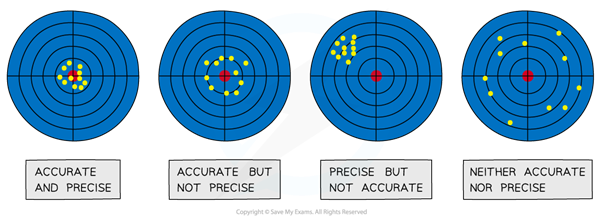
The Importance of Accuracy and Precision in Analytical Chemistry
Accuracy and precision are two critical components in the field of analytical chemistry. They play a vital role in ensuring the reliability and validity of experimental results, as well as in the interpretation of data.
Accuracy refers to how close a measured value is to the true or accepted value. In analytical chemistry, accurate measurements are essential for obtaining meaningful results. A lack of accuracy can lead to incorrect conclusions and decisions based on flawed data.
Precision, on the other hand, relates to the consistency or reproducibility of measurements. A precise measurement is one that yields similar results when repeated under the same conditions. Precision is crucial for assessing the reliability of experimental data and detecting small changes in a sample.
In analytical chemistry, both accuracy and precision are equally important. High accuracy ensures that experimental results reflect the true nature of a sample, while high precision indicates reliable and consistent measurements.
Various factors can affect the accuracy and precision of analytical measurements, such as instrument calibration, sample preparation techniques, environmental conditions, and human error. It is essential for chemists to carefully control these factors to minimise uncertainties and improve the quality of their data.
By prioritising accuracy and precision in analytical chemistry, researchers can enhance the credibility of their findings, make informed decisions based on reliable data, and contribute to advancements in scientific knowledge.
In conclusion, accuracy and precision are fundamental principles in analytical chemistry that underpin the validity and significance of experimental results. By striving for high levels of both accuracy and precision, chemists can conduct meaningful research, solve complex problems, and drive innovation in various fields.
8 Essential Tips for Enhancing Accuracy and Precision in Analytical Chemistry
- Always use calibrated equipment for accurate measurements.
- Follow standard operating procedures to ensure precision in your analysis.
- Regularly calibrate your instruments to maintain accuracy over time.
- Record all data and observations meticulously to avoid errors.
- Use appropriate significant figures when reporting results for precision.
- Perform replicate analyses to assess the precision of your method.
- Minimize sources of error by working in a clean and controlled environment.
- Seek feedback from colleagues or supervisors to improve the accuracy of your analytical techniques.
Always use calibrated equipment for accurate measurements.
To ensure accuracy and precision in analytical chemistry, it is crucial to always use calibrated equipment for accurate measurements. Calibration of instruments such as balances, pipettes, and spectrophotometers is essential to establish the reliability of measurements and minimise errors. By regularly calibrating equipment according to established standards, researchers can maintain the accuracy of their results and improve the overall quality of their analytical work. Investing time and effort in proper calibration procedures demonstrates a commitment to producing reliable data and upholding the integrity of scientific research in the field of analytical chemistry.
Follow standard operating procedures to ensure precision in your analysis.
Following standard operating procedures is essential to ensure precision in your analysis in the field of analytical chemistry. These procedures provide a systematic and consistent framework for conducting experiments, handling samples, and using equipment. By adhering to established protocols, you can minimise variability in your measurements and improve the reproducibility of your results. Consistency in following standard operating procedures not only enhances the precision of your analysis but also helps maintain the quality and reliability of your data, ultimately leading to more accurate and meaningful conclusions.
Regularly calibrate your instruments to maintain accuracy over time.
Regular calibration of instruments is a crucial tip in analytical chemistry to uphold accuracy and precision over time. By routinely calibrating equipment, chemists can ensure that measurements remain reliable and consistent, preventing inaccuracies that may arise from instrument drift or wear. This proactive approach not only enhances the quality of experimental data but also instils confidence in the validity of results obtained. Maintaining accurate instrumentation through regular calibration is essential for producing trustworthy findings and advancing scientific knowledge in the field of analytical chemistry.
Record all data and observations meticulously to avoid errors.
Recording all data and observations meticulously is a crucial tip in analytical chemistry to ensure accuracy and precision in experimental results. By maintaining detailed records of measurements, observations, and experimental conditions, chemists can identify potential sources of error, track changes in samples, and replicate experiments with consistency. This practice not only helps in minimising uncertainties but also enables researchers to validate their findings and draw reliable conclusions based on robust data. Attention to detail and thorough documentation play a significant role in enhancing the quality and reliability of analytical chemistry studies.
Use appropriate significant figures when reporting results for precision.
When reporting results for precision in analytical chemistry, it is crucial to use appropriate significant figures. The number of significant figures in a measurement indicates the level of precision of the data. By including only the significant figures that reflect the precision of the measurement, scientists can convey the accuracy of their results effectively. Using the correct number of significant figures helps to avoid misleading interpretations and ensures that the reported data accurately represent the experimental findings.
Perform replicate analyses to assess the precision of your method.
Performing replicate analyses is a valuable tip in analytical chemistry to evaluate the precision of a method. By conducting multiple analyses on the same sample under the same conditions, scientists can assess the consistency and reproducibility of their measurements. This practice helps identify any variations or random errors that may affect the precision of results, allowing researchers to refine their techniques and ensure reliable data interpretation. Replicate analyses play a crucial role in enhancing the quality and trustworthiness of analytical experiments, ultimately contributing to more accurate and precise scientific outcomes.
Minimize sources of error by working in a clean and controlled environment.
To enhance accuracy and precision in analytical chemistry, it is crucial to minimise sources of error by working in a clean and controlled environment. Contaminants or fluctuations in environmental conditions can introduce variability into measurements, leading to inaccurate results. By maintaining a pristine workspace and controlling factors such as temperature, humidity, and air quality, chemists can ensure the reliability of their data and improve the quality of their analytical experiments.
Seek feedback from colleagues or supervisors to improve the accuracy of your analytical techniques.
Seeking feedback from colleagues or supervisors is a valuable tip to enhance the accuracy of your analytical techniques in chemistry. By inviting input from others who have expertise in the field, you can gain valuable insights, identify potential errors or areas for improvement, and refine your methods to ensure more precise results. Collaborating with colleagues or seeking guidance from supervisors can help you fine-tune your analytical techniques, troubleshoot any issues, and ultimately elevate the quality and reliability of your experimental data in analytical chemistry.