
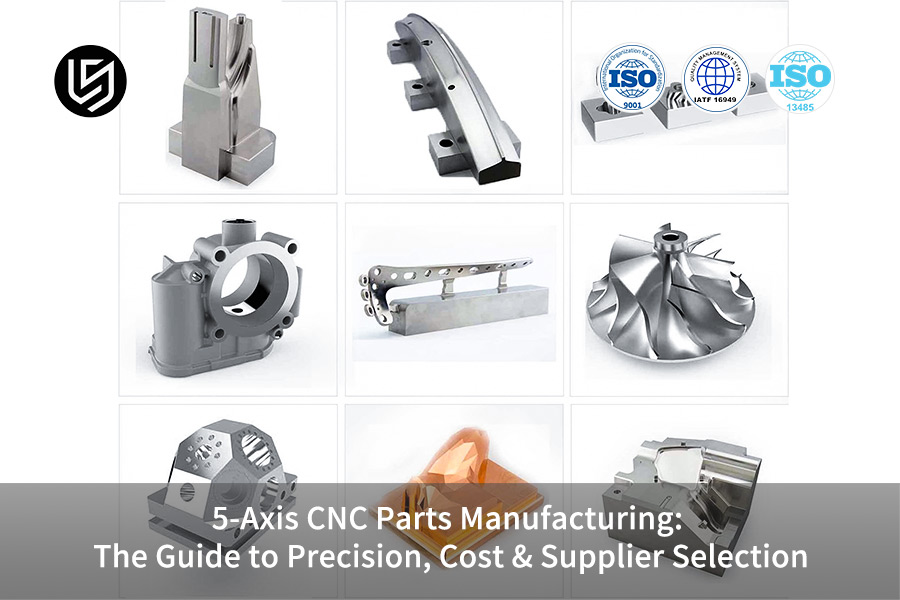
CNC Machining for Aerospace Parts
The aerospace industry depends on components that are lightweight, reliable and manufactured to exacting specifications. From aircraft structures and engine systems to satellite assemblies, each part must perform consistently in demanding conditions. Computer Numerical Control (CNC) machining helps manufacturers meet these requirements by producing complex components with precise, repeatable processes.
What is CNC machining?
CNC machining is a manufacturing process in which computer-controlled tools remove material from a workpiece to create a finished part. Common methods include milling, turning, drilling and multi-axis machining. A component is designed digitally, and its geometry is translated into instructions that guide the machine tools.
Because the process is automated, CNC machining can produce intricate shapes and closely controlled features with a high degree of consistency. It is used for both prototypes and production runs, depending on the design, material and manufacturing requirements.
Why aerospace parts are machined with CNC
Aerospace components often need to combine low weight with strength, durability and dimensional accuracy. CNC machining is well suited to this work because it can:
- Produce complex geometries, including pockets, contours and precise holes.
- Deliver repeatable results across multiple parts.
- Work with a range of engineering materials.
- Support design changes and prototyping without the need for dedicated moulds or dies.
- Create critical features that require careful control of dimensions and surface finish.
Machining can also be used to manufacture parts from a single billet, which may be appropriate where a design calls for a continuous piece of material. The best production method depends on factors such as the component’s function, material, geometry, expected volumes and inspection requirements.
Materials used in aerospace machining
The material is selected according to the conditions the component must withstand. Common choices include:
- Aluminium alloys: valued for their low weight, machinability and useful strength-to-weight characteristics.
- Titanium alloys: selected for demanding applications where strength, corrosion resistance and performance at elevated temperatures may be important. Titanium can be challenging to machine, so tool selection and heat management require particular attention.
- Stainless and alloy steels: used where strength, wear resistance or other mechanical properties are required.
- Nickel-based superalloys: used in some high-temperature applications, including certain engine components. These materials can be difficult to machine and may require specialised processes.
- Engineering plastics and composites: used for selected non-structural, insulating or lightweight applications, subject to the component’s design and operating environment.
Material traceability is important in aerospace manufacturing. Records may be needed to show the material’s specification, source and relationship to the finished component.
From digital design to finished component
A typical CNC machining project begins with a design and a clear definition of the part’s requirements. Engineers assess the geometry, material, tolerances, surface finish and inspection needs before planning the manufacturing process.
- Design review: The component model and drawings are checked for manufacturability and clarity.
- Process planning: The machining sequence, workholding, cutting tools and inspection stages are selected.
- Programming: Tool paths are created and reviewed before machining begins.
- Machining: The material is cut using the planned operations, which may include milling, turning or drilling.
- Finishing: Deburring, cleaning or specified surface treatments may be carried out where required.
- Inspection and documentation: The finished part is checked against its requirements, with results recorded as specified by the customer or applicable quality system.
Accuracy, inspection and quality control
Aerospace parts can include features that need close dimensional control. However, the required tolerance should be set by the design and functional needs of each feature; applying unnecessarily tight tolerances throughout a component can increase cost and manufacturing time without improving its performance.
Inspection methods may include calibrated measuring equipment, coordinate measuring machines and checks of surface finish or material condition. The inspection plan should reflect the component’s critical characteristics and the requirements agreed for the project. Clear records help support traceability and demonstrate that the agreed checks have been completed.
Suppliers working on aerospace components may also need to meet specific quality-management, customer and regulatory requirements. These vary by application and supply chain. Buyers should confirm a supplier’s relevant certifications, scope of approval and ability to provide the required records rather than assuming that a general machining capability is sufficient.
Challenges in machining aerospace components
Aerospace machining involves more than selecting a suitable CNC machine. Thin walls and complex forms can be susceptible to vibration or distortion. Difficult-to-machine materials can cause rapid tool wear or generate heat that affects the process. Large components may also need specialised workholding and careful planning to maintain accuracy across multiple operations.
These challenges can be addressed through design-for-manufacture reviews, appropriate cutting strategies, stable fixturing, tool management and inspection at suitable stages. Early communication between the design team and manufacturer can help identify potential issues before production begins.
Choosing a CNC machining partner
When sourcing machined aerospace parts, consider more than the machine list. Useful questions include:
- Has the supplier produced similar materials and component types?
- Can they meet the required inspection, traceability and documentation needs?
- Do their quality approvals cover the work being requested?
- Can they support design reviews, prototypes and production planning?
- How do they manage tooling, process changes and non-conforming parts?
Supplying clear drawings, material specifications, revision details and acceptance criteria can help a manufacturer provide a more accurate quotation and plan the work effectively.
Conclusion
CNC machining plays an important role in producing aerospace components that meet demanding design and manufacturing requirements. Its ability to create precise features from a range of materials makes it suitable for many structural, mechanical and specialist parts. Successful results depend on thoughtful design, robust process planning, appropriate quality controls and a clear understanding of the requirements for each component.
5 Essential CNC Machining Tips for Aerospace Parts
- Use aerospace-grade materials and certified stock.
- Choose tooling suited to the alloy and geometry.
- Control heat to prevent distortion and tool wear.
- Verify dimensions with calibrated inspection equipment.
- Record machining parameters for full traceability.
Use aerospace-grade materials and certified stock.
Use aerospace-grade materials and certified stock to help ensure that each component meets its specified strength, weight and performance requirements. Check that materials are supplied with the appropriate certification and traceability records, and confirm that the grade and condition match the engineering drawings. This supports quality control throughout machining and helps demonstrate that the finished part was made from the correct material.
Choose tooling suited to the alloy and geometry.
Choose tooling suited to both the alloy and the part’s geometry. Aerospace materials such as titanium and nickel-based superalloys can generate significant heat and accelerate tool wear, while thin walls, tight corners and deep cavities may call for different tool shapes and cutting strategies. Matching the tool material, coating, geometry and cutting parameters to the job can help maintain accuracy, protect surface quality and reduce the risk of tool failure.
Control heat to prevent distortion and tool wear.
Controlling heat is essential when CNC machining aerospace parts, as excessive temperatures can distort the component and accelerate tool wear. Use suitable cutting speeds, feeds and tool paths to manage heat generation, and apply the correct coolant or lubrication for the material and operation. Regularly monitoring tool condition and cutting performance can help maintain dimensional accuracy, protect surface finish and reduce the risk of defects.
Verify dimensions with calibrated inspection equipment.
Verify every critical dimension using calibrated inspection equipment, such as a coordinate measuring machine or precision gauges. Calibration helps ensure measurements are reliable and traceable, while a documented inspection process makes it easier to confirm that each aerospace part meets its drawing requirements. Check the equipment is suitable for the tolerances involved, and record the results in line with the project’s quality and traceability requirements.
Record machining parameters for full traceability.
Record the machining parameters used for every aerospace part, including the machine and tool details, cutting speeds, feed rates and any process adjustments. Keeping these records linked to the part’s serial or batch number supports full traceability, makes it easier to investigate issues and helps demonstrate that the component was produced in accordance with the agreed requirements. Ensure records are accurate, securely stored and available for review when needed.