
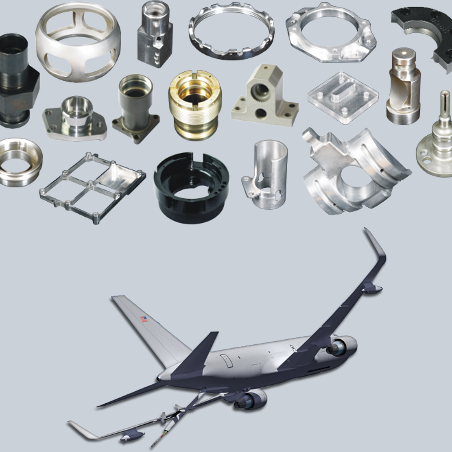
CNC Machining for Aerospace Parts
Aircraft and spacecraft rely on components that must perform consistently in demanding conditions. Parts may need to withstand vibration, temperature changes, pressure and repeated loading, while also meeting strict requirements for weight and dimensional accuracy. CNC machining helps manufacturers produce these components with precision and repeatability.
What is CNC machining?
Computer numerical control (CNC) machining uses programmed instructions to control cutting tools and remove material from a workpiece. Depending on the part, manufacturers may use milling, turning, drilling or a combination of processes. Multi-axis machines can cut complex features from several angles, often reducing the need to reposition the workpiece.
Machining is a subtractive process: the finished component is cut from a larger piece of material. This makes it well suited to parts that need precise features, smooth surfaces or complex shapes. It is also useful for producing prototypes, replacement components and production runs of varying sizes.
Common aerospace materials
Aerospace components are made from a range of materials, selected according to their intended function, operating environment and design requirements. Common choices include:
- Aluminium alloys: valued for their low weight, machinability and use in a variety of aircraft structures and fittings.
- Titanium alloys: used where strength, corrosion resistance and performance at elevated temperatures are important.
- Nickel-based alloys: selected for demanding high-temperature applications, including some engine components.
- Stainless and other alloy steels: used for parts requiring particular combinations of strength, wear resistance or corrosion resistance.
- Engineering plastics and composites: machined for selected non-structural, insulating or specialist applications, using processes suited to the material.
Each material behaves differently during machining. Hardness, heat generation, tool wear and the risk of distortion all influence the choice of tooling, cutting parameters and workholding method.
Typical aerospace components
CNC machining can be used to manufacture a wide range of aircraft and spacecraft parts. Examples include brackets, housings, panels, connectors, fittings, actuator components, valve bodies and precision interfaces. It is also used for selected parts in engines, landing gear and flight-control systems, where the design and material are suitable for machining.
Many components include features such as close-tolerance holes, thin walls, contoured surfaces and complex internal passages. These details can require careful planning to maintain accuracy throughout the machining process.
Why precision and repeatability matter
Aerospace parts often need to fit and function as part of a larger assembly. Dimensional variation can affect alignment, sealing, movement or load transfer. CNC programmes help make repeatable parts by following controlled tool paths, but accuracy depends on more than the machine alone. It also relies on sound design, stable fixturing, suitable tools, skilled process planning and appropriate inspection.
Manufacturers may use coordinate measuring machines, gauges, surface-finish instruments and other inspection equipment to verify that a part meets its drawing and specification. The inspection method is chosen according to the feature being checked and the applicable quality requirements.
Key manufacturing challenges
Machining difficult materials
Titanium and nickel-based alloys can be challenging to cut. They may generate substantial heat at the cutting edge or cause rapid tool wear. Selecting suitable tooling, controlling cutting conditions and managing coolant are important for achieving consistent results.
Managing thin walls and complex shapes
Lightweight designs may have thin sections that are susceptible to vibration or distortion during machining. Manufacturers can address this through careful workholding, staged material removal and process planning that limits cutting forces where possible.
Controlling cost and material use
Some aerospace parts are machined from expensive stock, and complex components can produce considerable offcut material. Design choices, nesting where applicable, toolpath planning and effective use of near-net-shape starting forms can help reduce waste, although the right approach depends on the part and production requirements.
Quality systems and traceability
Aerospace supply chains typically place strong emphasis on documented processes, inspection and traceability. Manufacturers may need to record material details, production steps, inspection results and any approved changes. The precise requirements depend on the customer, application, contract and relevant regulations or standards.
For this reason, choosing a machining supplier involves more than comparing machine capacity. Buyers may also consider quality-management systems, staff competence, measurement capabilities, process controls and the supplier’s experience with the required materials and part types.
The role of digital manufacturing
CAD and CAM software are central to modern CNC machining. Engineers use digital models to define part geometry, while CAM systems help generate toolpaths and machining instructions. Simulation can identify potential tool collisions or manufacturing issues before production begins. When used alongside appropriate verification and inspection, these tools can support efficient planning and consistent production.
Choosing a CNC machining partner
When sourcing aerospace parts, it is useful to discuss the following with a prospective manufacturer:
- the materials, part sizes and geometries they can machine;
- their experience with similar components and tolerances;
- available inspection and measurement equipment;
- how they manage material documentation and part traceability;
- their approach to prototypes, production volumes and repeat orders; and
- how they handle design feedback, non-conformities and change control.
Conclusion
CNC machining is an important manufacturing method for aerospace components that require precise features, dependable repeatability and carefully controlled production. Its success depends on the right combination of material knowledge, machine capability, process planning and inspection. By considering these factors from the design stage onwards, aerospace manufacturers and their suppliers can make parts that meet demanding technical and quality requirements.
8 Essential Tips for CNC Machining Aerospace Parts
- Use certified materials and maintain full traceability.
- Follow the latest approved drawings and specifications.
- Verify machine calibration before production.
- Secure thin-walled parts with carefully designed fixtures.
- Choose cutting tools suited to the alloy and operation.
- Simulate toolpaths to prevent collisions and scrap.
- Monitor cutting forces, temperatures and tool wear.
- Inspect critical features with calibrated equipment.
Use certified materials and maintain full traceability.
Use certified materials and maintain full traceability throughout the manufacturing process. Verify that each material batch is supported by the required certificates, then record its details alongside the part, machining steps and inspection results. This helps confirm that aerospace components meet their specified requirements, supports quality audits and makes it easier to investigate any issue later.
Follow the latest approved drawings and specifications.
Always work from the latest approved drawings and specifications when machining aerospace parts. These documents define the component’s dimensions, tolerances, materials, finishes and other critical requirements; using an outdated or unapproved revision could lead to rework, delays or a non-conforming part. Before production begins, confirm the revision status and ensure the correct documents are available to everyone involved in manufacturing and inspection.
Verify machine calibration before production.
Before production begins, verify that the CNC machine is properly calibrated. Check key elements such as axis positioning, spindle alignment and tool offsets, and confirm that measuring equipment is also within calibration. Even small errors can affect the dimensions and fit of aerospace components, so regular checks help maintain accuracy, consistency and compliance with the relevant specifications.
Secure thin-walled parts with carefully designed fixtures.
Thin-walled aerospace parts can flex or vibrate under cutting forces, leading to distortion, poor surface finish or dimensional inaccuracies. A carefully designed fixture supports the component evenly and holds it securely without applying excessive pressure that could deform it. Where appropriate, use dedicated supports or soft contact points, and plan the machining sequence to maintain stability as material is removed. Checking the setup before cutting helps ensure the part stays accurately positioned throughout the operation.
Choose cutting tools suited to the alloy and operation.
Choose cutting tools suited to both the alloy and the machining operation. Aerospace materials such as titanium and nickel-based alloys can generate significant heat and cause rapid tool wear, so the right tool material, coating and geometry can make a real difference. Match these to the specific task—whether roughing, finishing, drilling or milling—and consider factors such as cutting speed, rigidity and coolant delivery. The result can be more consistent part quality, longer tool life and fewer interruptions during production.
Simulate toolpaths to prevent collisions and scrap.
Simulating toolpaths before machining can help catch problems while they are still on screen, rather than at the machine. A simulation lets programmers check for collisions between the tool, workpiece, fixtures and machine components, as well as identify inefficient movements or unexpected cuts. This is especially valuable for complex aerospace parts, where a mistake can damage costly material, tooling or equipment and create scrap. Simulation does not replace careful setup and verification, but it can reduce risk and help ensure the programme is ready for production.
Monitor cutting forces, temperatures and tool wear.
Monitoring cutting forces, temperatures and tool wear helps maintain consistent quality when CNC machining aerospace parts. Excessive force or heat can cause tool damage, dimensional inaccuracies or surface defects, while gradual wear may go unnoticed until it affects the finished component. Using sensors and regular checks to track these conditions allows operators to adjust cutting parameters, replace tools at the right time and reduce the risk of costly rework or scrapped parts.
Inspect critical features with calibrated equipment.
Inspect critical features with calibrated equipment to confirm that aerospace parts meet their specified dimensions and tolerances. Use suitable tools—such as a coordinate measuring machine, bore gauge or calibrated calliper—and check that calibration is current before taking measurements. Record the results so they can be traced to the part and inspection process. This helps identify deviations early and supports consistent quality across production runs.