
The Difference Between Precision and Accuracy in Physics
In the field of physics, precision and accuracy are two essential concepts that are often used interchangeably but have distinct meanings.
Precision
Precision refers to the level of consistency or reproducibility of measurements. A set of measurements is considered precise if they are close to each other, even if they are not close to the true value. In other words, precision indicates how well a measurement can be repeated under the same conditions.
Accuracy
Accuracy, on the other hand, refers to how close a measurement is to the true or accepted value. An accurate measurement is one that is close to the actual value being measured. It reflects how well a measurement represents reality.
Relationship Between Precision and Accuracy
It is important to note that precision and accuracy are independent of each other. A measurement can be precise but not accurate if it consistently misses the true value by the same amount. Conversely, a measurement can be accurate but not precise if it varies widely from one trial to another.
Example:
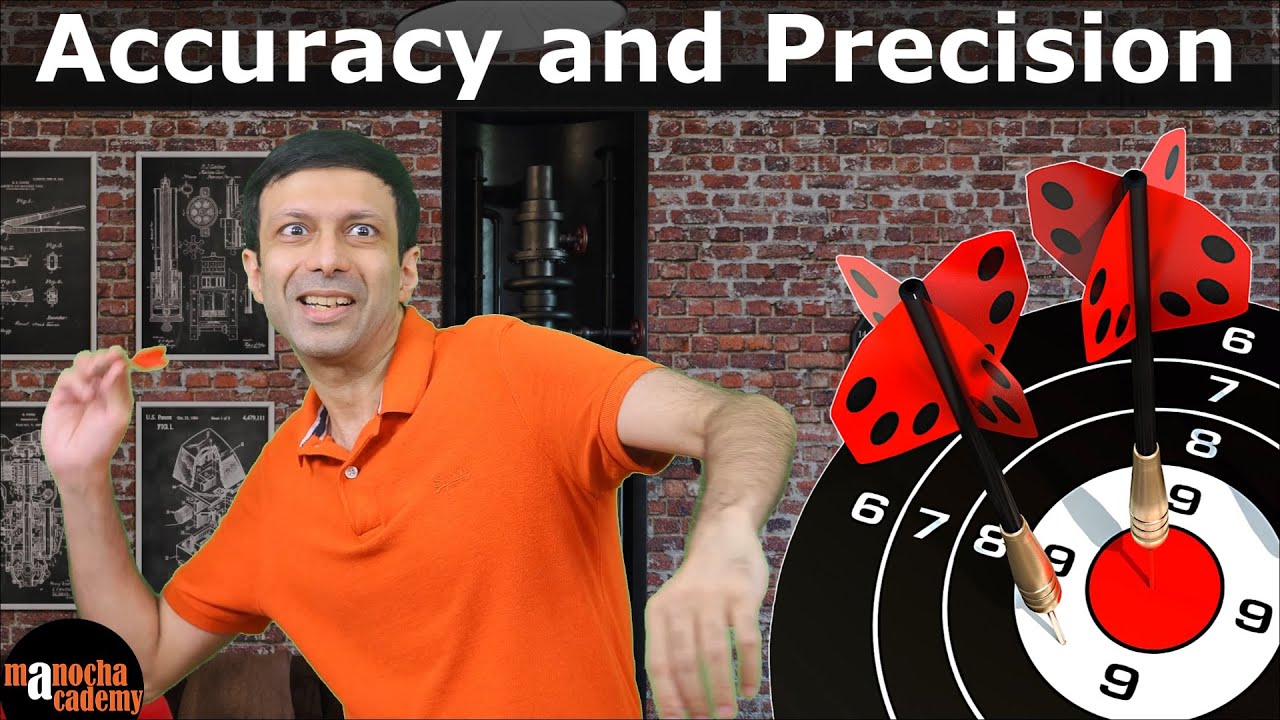
If we consider shooting at a target with a rifle, precision would refer to how closely grouped your shots are on the target, regardless of whether they hit the bullseye. Accuracy would refer to how close your shots are to the bullseye itself.
Conclusion
In summary, precision relates to consistency and repeatability, while accuracy relates to closeness to the true value. Both precision and accuracy are crucial in physics as they help ensure reliable and valid measurements in scientific experiments.
Understanding Precision and Accuracy in Physics: Key Differences and Their Importance in Scientific Measurements
- What is the difference between precision and accuracy in physics?
- How do precision and accuracy differ in the field of physics?
- Why are precision and accuracy important in scientific measurements?
- Can a measurement be precise but not accurate in physics?
- Is it possible for a measurement to be accurate but not precise in physics?
- What examples can illustrate the distinction between precision and accuracy in physics?
- How do scientists ensure both precision and accuracy in experimental measurements?
- What impact does the lack of precision or accuracy have on scientific results?
What is the difference between precision and accuracy in physics?
In the realm of physics, the distinction between precision and accuracy is a common query. Precision in physics denotes the level of consistency or reproducibility in measurements, highlighting how closely multiple measurements align with each other, irrespective of their proximity to the true value. On the other hand, accuracy pertains to the proximity of a measurement to the actual or accepted value, indicating how faithfully a measurement reflects reality. Understanding this disparity is fundamental in ensuring that experimental results are not only consistent but also reliably reflect the true nature of physical phenomena.
How do precision and accuracy differ in the field of physics?
In the realm of physics, the distinction between precision and accuracy is a common query that arises frequently. Precision in physics pertains to the level of consistency and reproducibility of measurements, showcasing how closely repeated measurements align with each other. On the other hand, accuracy refers to how closely a measurement corresponds to the true or accepted value being measured, reflecting its proximity to reality. Understanding this disparity is crucial in conducting experiments and analyses in physics, as it ensures that measurements are not only reliable and consistent (precise) but also reflect the actual values being sought (accurate). Mastering the nuances between precision and accuracy is fundamental for achieving meaningful results and drawing valid conclusions in the field of physics.
Why are precision and accuracy important in scientific measurements?
Precision and accuracy play vital roles in scientific measurements as they are crucial for ensuring the reliability and validity of experimental results. Precision allows for consistent and reproducible measurements, enabling scientists to assess the variability and reliability of their data. On the other hand, accuracy ensures that measurements are close to the true value being measured, providing an indication of how well the data represent reality. By striving for both precision and accuracy in scientific measurements, researchers can minimise errors, make informed conclusions based on reliable data, and ultimately advance our understanding of the natural world with confidence and credibility.
Can a measurement be precise but not accurate in physics?
In the realm of physics, the question of whether a measurement can be precise but not accurate is a common query that highlights the nuanced distinction between these two fundamental concepts. The answer is affirmative: a measurement can indeed be precise but not accurate in physics. Precision in measurements pertains to the consistency and reproducibility of results, indicating how closely repeated measurements align with each other. On the other hand, accuracy relates to how closely a measurement reflects the true or accepted value being measured. Therefore, it is entirely plausible for measurements to exhibit high precision by consistently clustering together while simultaneously deviating from the actual value, thereby lacking accuracy. This distinction underscores the importance of considering both precision and accuracy in scientific endeavours to ensure reliable and meaningful results in physics experiments.
Is it possible for a measurement to be accurate but not precise in physics?
In the field of physics, the question of whether a measurement can be accurate but not precise is a common query that highlights the distinction between these two fundamental concepts. The answer is yes, it is indeed possible for a measurement to be accurate but not precise in physics. This scenario occurs when repeated measurements consistently yield values that are close to the true or accepted value (accuracy), but they do not cluster closely together (precision). In such cases, while the measurements may be accurate in terms of their proximity to the true value, the lack of consistency or reproducibility indicates a lack of precision. This distinction underscores the importance of considering both accuracy and precision in scientific measurements to ensure a comprehensive evaluation of data quality and reliability.
What examples can illustrate the distinction between precision and accuracy in physics?
In physics, the distinction between precision and accuracy can be illustrated through various examples that highlight the subtle yet crucial differences between the two concepts. One common example is that of a target shooting scenario. If a marksman consistently hits the same spot on a target, albeit not the bullseye, their shots are considered precise but not accurate. On the other hand, if another marksman’s shots are scattered across the target but closer to the bullseye, they are accurate but not precise. This analogy effectively demonstrates how precision relates to consistency and repeatability of measurements, while accuracy pertains to how close those measurements are to the true value being measured in physics experiments.
How do scientists ensure both precision and accuracy in experimental measurements?
In the realm of experimental measurements in physics, scientists employ various techniques to ensure both precision and accuracy. To achieve precision, scientists often repeat measurements multiple times and calculate the average to reduce random errors. They may also use high-precision instruments and calibration procedures to minimise uncertainties in their measurements. For accuracy, scientists calibrate their instruments against known standards and employ rigorous validation methods to verify the reliability of their results. Additionally, careful experimental design, meticulous data analysis, and peer review processes help ensure that measurements are as accurate as possible. By combining these strategies, scientists strive to achieve a delicate balance between precision and accuracy in their experimental work, ultimately enhancing the credibility and robustness of their findings in the field of physics.
What impact does the lack of precision or accuracy have on scientific results?
The lack of precision or accuracy in scientific measurements can have significant implications on the validity and reliability of research findings. When measurements lack precision, it becomes challenging to determine the consistency and reproducibility of results, potentially leading to unreliable conclusions. On the other hand, inaccuracies in measurements can introduce systematic errors that skew results away from the true value, undermining the credibility of the study. Both scenarios can impact the overall quality of scientific results, hindering progress in understanding natural phenomena and potentially leading to incorrect interpretations or conclusions. Therefore, ensuring both precision and accuracy in scientific measurements is essential for producing trustworthy and meaningful outcomes in the field of physics.