
The Difference Between Accuracy and Precision
Accuracy and precision are two terms often used interchangeably, but they have distinct meanings in the realm of measurement and data analysis. Understanding the difference between accuracy and precision is crucial for ensuring reliable results in various fields.
Accuracy
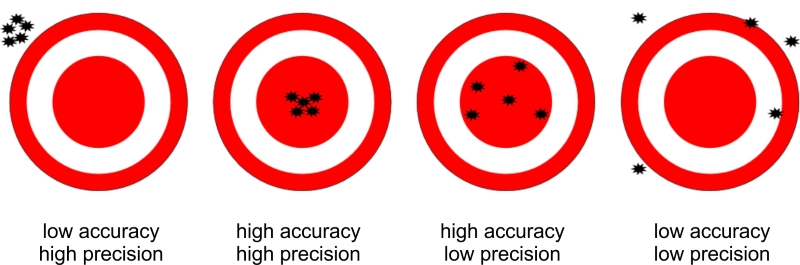
Accuracy refers to how close a measured value is to the true or accepted value. In other words, accuracy measures the degree of correctness in a measurement. A highly accurate measurement will be very close to the true value, indicating minimal error.
Precision
Precision, on the other hand, relates to the level of consistency or reproducibility in repeated measurements. A precise measurement will yield similar results when taken multiple times under the same conditions. Precision does not necessarily guarantee accuracy if the measurements are consistently off-target.
Key Differences
- Accuracy is about closeness to the true value, while precision focuses on consistency.
- An accurate measurement may not be precise if it varies widely in repeated trials.
- A precise measurement may not be accurate if it consistently misses the target value.
- Both accuracy and precision are essential for reliable and meaningful data analysis.
Importance of Accuracy and Precision
Whether in scientific research, engineering, manufacturing, or any field that relies on measurements, both accuracy and precision play critical roles. Achieving a balance between accuracy and precision ensures that results are both reliable and meaningful.
In conclusion, while accuracy reflects how close a measured value is to the true value, precision indicates how consistent measurements are when repeated. By understanding and prioritising both accuracy and precision in data collection and analysis, professionals can make informed decisions based on trustworthy information.
Understanding the Crucial Distinctions Between Accuracy and Precision: 6 Key Benefits
- Accuracy ensures correctness in measurements, providing reliable data for decision-making.
- Precision enhances the reproducibility of results, aiding in the detection of subtle changes or patterns.
- Distinguishing between accuracy and precision helps in identifying and addressing sources of error in measurements.
- Accurate measurements are crucial for meeting regulatory standards and quality control requirements.
- Precision allows for better comparison between different sets of data, leading to more informed conclusions.
- Understanding the difference between accuracy and precision improves overall data integrity and validity.
Understanding the Distinction Between Accuracy and Precision: Navigating Confusion, Misleading Results, Costly Errors, Complex Analysis, and Trade-offs
Accuracy ensures correctness in measurements, providing reliable data for decision-making.
Accuracy plays a crucial role in ensuring correctness in measurements, thereby providing reliable data for decision-making. When measurements are accurate, they closely align with the true or accepted values, reducing the margin of error and increasing confidence in the data collected. This precision in accuracy allows professionals across various fields to make informed decisions based on trustworthy information, leading to more effective outcomes and solutions. In essence, accuracy acts as a cornerstone for producing reliable data that serves as a solid foundation for critical decision-making processes.
Precision enhances the reproducibility of results, aiding in the detection of subtle changes or patterns.
Precision plays a crucial role in enhancing the reproducibility of results, thereby aiding in the detection of subtle changes or patterns. When measurements are precise and consistent, researchers can rely on the reliability of their data to identify even the smallest variations or trends. This heightened level of precision not only increases the confidence in the findings but also allows for more accurate interpretations and conclusions to be drawn from the data. By prioritising precision in measurements, professionals can uncover intricate details and nuances that may have otherwise gone unnoticed, leading to a deeper understanding of the subject matter at hand.
Distinguishing between accuracy and precision helps in identifying and addressing sources of error in measurements.
Distinguishing between accuracy and precision is a crucial pro as it aids in identifying and addressing sources of error in measurements. By understanding the difference between these two concepts, researchers and professionals can pinpoint whether discrepancies in their data stem from inaccuracies in measurement values or inconsistencies in the precision of their instruments or methods. This distinction allows for targeted adjustments to be made, leading to more reliable and trustworthy results in various fields such as science, engineering, and quality control. Ultimately, by honing in on the specific areas of improvement needed for either accuracy or precision, practitioners can enhance the overall quality and validity of their measurements.
Accurate measurements are crucial for meeting regulatory standards and quality control requirements.
Accurate measurements play a vital role in meeting regulatory standards and quality control requirements across various industries. Ensuring that measurements align closely with the true values helps organisations comply with regulations, maintain product quality, and uphold safety standards. By prioritising accuracy in their measurements, businesses can demonstrate reliability, consistency, and adherence to industry guidelines, ultimately enhancing customer trust and satisfaction. Meeting regulatory standards through accurate measurements not only safeguards against errors and inconsistencies but also reinforces the credibility and integrity of the products or services provided.
Precision allows for better comparison between different sets of data, leading to more informed conclusions.
Precision plays a crucial role in data analysis by enabling better comparisons between different sets of data, ultimately leading to more informed conclusions. When measurements are precise and consistent, researchers and analysts can confidently compare various data points without the interference of random variability. This enhanced ability to compare data sets allows for a deeper understanding of trends, patterns, and relationships, facilitating the extraction of valuable insights and making more accurate interpretations. By prioritising precision in measurements, professionals can ensure that their analyses are robust and reliable, ultimately contributing to more informed decision-making processes.
Understanding the difference between accuracy and precision improves overall data integrity and validity.
Understanding the distinction between accuracy and precision is a crucial pro that significantly enhances overall data integrity and validity. By grasping the nuances of these concepts, individuals can ensure that their measurements are not only close to the true value but also consistently reproducible. This knowledge empowers researchers, analysts, and professionals to make informed decisions based on reliable data, ultimately leading to more robust conclusions and outcomes. Emphasising accuracy and precision in data collection and analysis processes elevates the quality of information, instilling confidence in the results obtained and enhancing the credibility of any findings or recommendations put forth.
Confusion
The similarity in terminology between accuracy and precision can often lead to confusion, posing a significant con in the realm of measurement and data analysis. The interchangeable use of these terms may result in misinterpretation of data, as individuals may struggle to differentiate between the concepts of accuracy and precision. This confusion can hinder the ability to communicate effectively about the quality of measurements and the reliability of results. It is crucial for professionals to be aware of this potential pitfall and strive for clarity in distinguishing between accuracy, which pertains to closeness to the true value, and precision, which focuses on consistency in repeated measurements.
Misleading Results
Overemphasising precision without considering accuracy can result in misleading outcomes that fail to accurately represent the true value being measured. While precision focuses on the consistency and reproducibility of measurements, it does not guarantee that those measurements are close to the actual target value. Relying solely on precision may create a false sense of confidence in the data, leading to erroneous conclusions and decisions. It is essential to strike a balance between accuracy and precision to ensure that results are not only consistent but also truly reflect the intended measurement with minimal error.
Costly Errors
In industries where precise measurements are crucial for success, such as manufacturing or healthcare, focusing solely on either accuracy or precision can lead to costly errors. Relying only on accuracy without considering precision may result in inconsistent and unreliable measurements, impacting the quality of products or services. On the other hand, prioritising precision over accuracy could lead to consistently repeatable but inaccurate results, causing significant financial losses or compromising safety standards. Striking a balance between accuracy and precision is essential to avoid costly mistakes and ensure that data and measurements are both reliable and meaningful in high-stakes environments.
Complex Analysis
Complex Analysis: Distinguishing between accuracy and precision can present a challenge as it demands a profound comprehension of measurement principles, leading to increased complexity in data analysis. The intricacies involved in discerning the subtle nuances between accuracy (closeness to the true value) and precision (consistency of measurements) may require advanced knowledge and expertise. This complexity can potentially introduce ambiguity and difficulties in interpreting results accurately, especially in fields where precise measurements are crucial. Therefore, navigating the realm of accuracy and precision demands a meticulous approach to ensure that data analysis is conducted with the necessary depth and understanding to derive meaningful insights.
Trade-offs
When it comes to the con of the difference between accuracy and precision, one significant challenge is the trade-offs involved in achieving high levels of both simultaneously. Striking a perfect balance between accuracy and precision can be demanding, as improvements in one aspect often come at the expense of the other. Depending on the specific requirements of a task, decision-makers may need to make trade-offs to prioritise either accuracy or precision. For instance, in situations where absolute correctness is crucial, sacrificing some precision may be necessary to ensure accurate results. Conversely, when consistency and reproducibility are paramount, accepting a slight deviation from the true value may be unavoidable. Navigating these trade-offs effectively requires careful consideration and a deep understanding of the goals and constraints of the task at hand.