
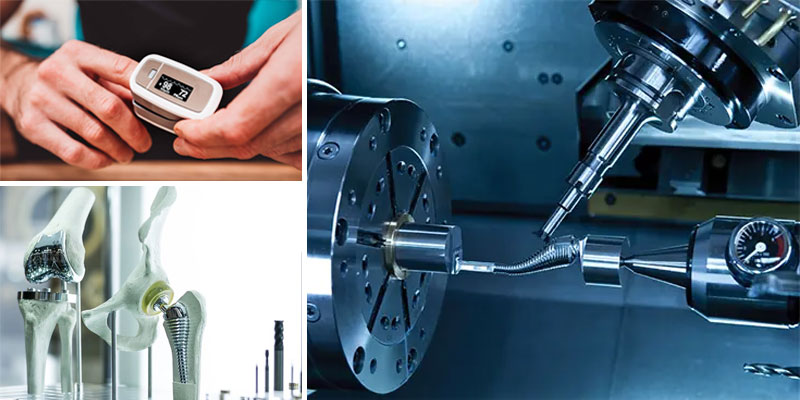
CNC Medical Parts Manufacturing: Precision for Modern Healthcare
Medical devices and equipment often rely on components that must fit, function and perform consistently. From surgical instruments to diagnostic systems, even a small variation in a part can affect how an assembly works. CNC medical parts manufacturing helps meet these demands by using computer-controlled machining to produce precise components from metals and engineering plastics.
However, precision is only one part of the picture. Medical manufacturing also calls for careful material selection, controlled processes, thorough inspection and clear documentation. The requirements vary according to the component’s intended use, the device it belongs to and the regulations that apply.
What is CNC medical parts manufacturing?
CNC stands for computer numerical control. In CNC machining, digital instructions guide tools such as mills and lathes as they cut material into a specified shape. The process can produce simple components as well as parts with intricate features, close tolerances or complex geometries.
Common CNC methods include:
- CNC milling: Rotating cutting tools remove material from a stationary or moving workpiece. Milling is used for features such as pockets, slots, flats and contoured surfaces.
- CNC turning: The workpiece rotates while a cutting tool shapes it. Turning is well suited to cylindrical components, including shafts, pins and connectors.
- Multi-axis machining: Machines with additional axes can reach several sides of a part, often reducing the need to reposition it between operations.
- Swiss-type machining: This turning process supports the workpiece close to the cutting tool, making it useful for producing small, slender components in volume.
The right method depends on the part’s design, material, required finish, production quantity and inspection needs.
Where are CNC-machined medical parts used?
CNC machining supports a broad range of medical and healthcare applications. Components may be found in:
- Surgical instruments and instrument handles
- Diagnostic and laboratory equipment
- Imaging and monitoring systems
- Fluid-handling devices and connectors
- Medical equipment housings and mounting components
- Orthopaedic and dental devices
- Prototypes and specialist, low-volume equipment
Some components are used outside the body, while others may contact patients or bodily fluids. The intended use has a major bearing on material choice, surface requirements, cleaning methods and the level of process control needed.
Choosing suitable materials
Materials must be selected for the component’s function and operating environment. Factors can include strength, weight, corrosion resistance, wear, sterilisation conditions, compatibility with other materials and, where relevant, biocompatibility.
Commonly machined materials include:
- Stainless steels: Often chosen for strength and corrosion resistance. The appropriate grade depends on the application and required properties.
- Titanium and titanium alloys: Used where a strong, relatively lightweight material is required. They can be more challenging to machine than many common metals.
- Aluminium alloys: Useful for lightweight housings, fixtures and equipment components, though suitability depends on the environment and contact requirements.
- Engineering plastics: Materials such as PEEK, acetal and selected grades of nylon may be used for components requiring low weight, electrical insulation or particular chemical properties.
A material’s name alone is not enough to establish suitability for a medical application. The exact grade, supplier documentation, manufacturing history and intended use should all be considered. Where patient contact is involved, the device manufacturer must determine and verify whether the material meets the relevant requirements.
Designing parts for reliable machining
Good design can make a component easier to manufacture, inspect and reproduce. It can also help control cost and lead time. Design for manufacture (DFM) reviews commonly consider:
- Tolerances: Tight tolerances should be specified only where function requires them. Unnecessarily restrictive tolerances can increase machining time, inspection effort and scrap risk.
- Tool access: Deep, narrow features and sharp internal corners may be difficult to machine. Suitable radii and accessible geometries can improve consistency.
- Wall thickness: Thin sections may flex during machining, making dimensions and surface quality harder to control.
- Part orientation: The way a part is held and machined can affect accuracy, surface finish and the number of operations required.
- Inspection planning: Critical dimensions and features should be measurable with suitable methods and equipment.
Engaging a machinist during design development can identify potential issues before production begins. This is particularly useful for complex parts, new devices and designs moving from prototype to repeat production.
Quality control and traceability
Quality assurance in medical manufacturing is not limited to checking a finished part. Depending on the product and the supplier’s role, controls may cover material receipt, machining, finishing, cleaning, inspection, packaging and record-keeping.
Inspection methods may include calibrated measuring equipment, gauges, optical measurement systems and coordinate measuring machines (CMMs). The inspection plan should reflect the part’s risk, drawing requirements and intended function. Where appropriate, records can link a component to its material batch, process history and inspection results.
Traceability and documentation are especially important when components form part of a regulated medical device. Requirements depend on the applicable legislation, standards, contracts and quality systems. A purchaser should verify a supplier’s capabilities and certifications directly rather than assuming that every CNC machine shop follows the same controls.
Surface finishing and cleanliness
Machining is often followed by additional operations, such as deburring, polishing, passivation, anodising or other specified surface treatments. The right finish depends on the material and intended function. For example, a component may need a particular surface texture, corrosion performance or appearance.
Finishing and cleaning requirements should be defined clearly. A part destined for further assembly or sterilisation may need to meet specific cleanliness and packaging expectations. The manufacturing supplier and device manufacturer should agree who is responsible for each step and how it will be verified.
Benefits and limitations
CNC machining offers several advantages for medical components:
- Accurate production of detailed features
- Repeatability when processes are properly controlled
- A wide choice of machinable metals and plastics
- Efficient prototyping and production of small or medium batches
- Design flexibility without the need for dedicated moulds
It also has limitations. Material is removed rather than formed, so complex parts can generate significant waste. Production costs may rise for very large quantities, parts with extensive machining or designs requiring exceptionally tight tolerances. Alternative processes, such as injection moulding, metal forming or additive manufacturing, may be more suitable in some cases.
How to select a CNC medical parts supplier
When evaluating a supplier, consider more than machine capacity. Useful questions include:
- Can the supplier work with the specified materials and tolerances?
- What inspection equipment and measurement procedures are available?
- How are material certificates, batch records and production documents managed?
- Can the supplier support prototypes, design reviews and repeat production?
- Which finishing, cleaning and packaging operations are performed in-house or by subcontractors?
- What quality-system certifications does the supplier hold, and are they relevant to the work?
Clear drawings, agreed acceptance criteria and early discussion of regulatory responsibilities help establish a reliable working relationship. Certification claims should be checked for scope, validity and relevance to the specific product or process.
Conclusion
CNC medical parts manufacturing makes it possible to produce precise components for a wide variety of healthcare applications. Achieving dependable results requires more than accurate machining: it involves thoughtful design, appropriate materials, controlled finishing, suitable inspection and robust documentation.
By defining the component’s requirements early and choosing a supplier whose capabilities match the application, medical device teams can improve manufacturability and support consistent production. The final requirements should always be determined by the device’s intended use and the regulations that apply in the markets where it will be supplied.
8 Key Benefits of CNC Manufacturing for Medical Components
- High precision for intricate components
- Consistent, repeatable production
- Supports a wide range of materials
- Ideal for prototypes and small batches
- Enables complex part geometries
- Reduces manual machining errors
- Offers excellent design flexibility
- Produces components with reliable fit and function
Key Drawbacks of CNC Manufacturing for Medical Parts
- High machining and inspection costs, particularly for tight tolerances.
- Material waste can be significant because machining removes excess material.
- Complex parts may require longer lead times and specialist equipment.
High precision for intricate components
CNC medical parts manufacturing offers exceptional precision, making it well suited to intricate components with complex shapes, fine details and tight tolerances. Computer-controlled tools follow carefully programmed instructions, helping to produce features consistently across multiple parts. This accuracy can support reliable assembly and function in medical devices, where even small dimensional variations may matter. Actual tolerances depend on the design, material and machining process, so they should be agreed with the manufacturer.
Consistent, repeatable production
Consistent, repeatable production
CNC machining uses computer-controlled instructions to make each component to the same defined specifications. Once a process has been properly set up and validated, it can produce repeatable results across a production run, helping reduce variation between parts and supporting reliable assembly. This consistency is particularly valuable for medical components, where dimensions and performance may need to meet exact requirements. Regular inspection and process monitoring remain essential to confirm that parts continue to meet the specification.
Supports a wide range of materials
CNC medical parts manufacturing supports a wide range of materials, allowing components to be made from metals such as stainless steel, titanium and aluminium, as well as engineering plastics such as PEEK and acetal. This flexibility helps designers choose materials to suit a part’s specific needs, including strength, weight, corrosion resistance and operating environment. The material must always be appropriate for the component’s intended use, with any patient-contact and regulatory requirements carefully assessed.
Ideal for prototypes and small batches
CNC machining is ideal for producing medical prototypes and small batches because it can create accurate parts directly from a digital design without the need for costly moulds or dedicated tooling. This makes design changes quicker and more economical, helping teams test fit, function and usability before committing to larger-scale production. It also offers a practical way to manufacture limited quantities of specialist components while maintaining consistent quality.
Enables complex part geometries
CNC medical parts manufacturing enables the production of complex geometries that can be difficult to achieve using conventional methods. Multi-axis machining can shape intricate contours, fine features and carefully positioned channels in a single setup, helping create components designed to fit precisely within advanced medical devices. This design flexibility can also reduce the need for multiple parts and assembly steps, while maintaining the accuracy and repeatability essential for reliable performance.
Reduces manual machining errors
CNC medical parts manufacturing reduces the risk of manual machining errors by following carefully programmed instructions to produce each component. Once the process is set up and verified, the machine can repeat the same tool paths and measurements consistently, helping limit variations caused by differences in operator technique or fatigue. This repeatability supports accurate production and can reduce defects, rework and material waste. Human oversight remains essential for programming, setup and quality checks, particularly where component dimensions are critical to a medical device’s performance.
Offers excellent design flexibility
CNC medical parts manufacturing offers excellent design flexibility, allowing engineers to create components with complex shapes, fine details and precise features to suit specific medical applications. Designs can be refined and adapted without the need for costly moulds or dedicated tooling, making it easier to develop prototypes, customise parts and respond to changing requirements. This flexibility helps manufacturers balance performance, fit and functionality while producing components from a wide range of suitable materials.
Produces components with reliable fit and function
CNC medical parts manufacturing produces components with reliable fit and function by following precise digital specifications and repeatable machining processes. This consistency helps parts meet their required dimensions, align correctly with other components and perform as intended in medical devices. Reliable fit can also simplify assembly and reduce the risk of faults caused by dimensional variation.
High machining and inspection costs, particularly for tight tolerances.
A key drawback of CNC medical parts manufacturing is the high cost of machining and inspection, particularly when components require tight tolerances. Achieving precise dimensions can involve slower machining, specialised tooling and repeated measurements, while advanced inspection equipment and skilled operators add further expense. These costs can increase the price and lead time of each part, so tolerances should be as tight as the component’s function and safety requirements genuinely demand.
Material waste can be significant because machining removes excess material.
One drawback of CNC medical parts manufacturing is the amount of material it can waste. Machining creates a component by cutting away excess material from a solid block or bar, and complex designs can leave a substantial volume of offcuts or swarf. This may increase material costs, particularly when working with expensive metals such as titanium, and creates additional demands for collecting, recycling or disposing of waste. Careful design and efficient nesting or machining strategies can help reduce waste, although they cannot eliminate it entirely.
Complex parts may require longer lead times and specialist equipment.
Complex medical components can take longer to manufacture because they may need multiple machining set-ups, intricate operations and repeated inspections to confirm that every feature meets specification. Producing them may also require specialist equipment, such as multi-axis CNC machines, along with skilled operators and carefully planned processes. These requirements can affect availability and extend lead times, particularly for prototypes or low-volume orders, so it is wise to discuss the design, inspection plan and production schedule with the manufacturer early on.