
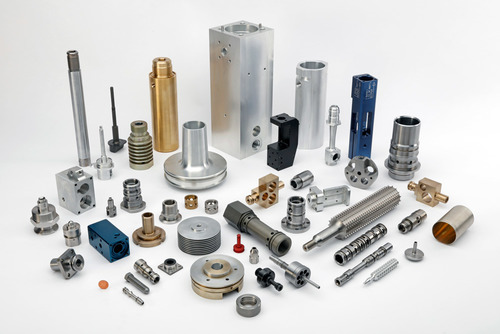
CNC Precision Turned Parts: A Guide to the Process and Its Benefits
CNC precision turned parts are components manufactured by rotating a workpiece against cutting tools controlled by a computer numerical control (CNC) system. The process can produce accurate, repeatable parts for industries where dimensions, surface finish and reliability matter.
From simple pins and bushes to complex threaded fittings, CNC turning is widely used to make cylindrical components in metals and plastics. This guide explains how the process works, what it can produce and what to consider when specifying turned parts.
What is CNC turning?
In CNC turning, a bar or blank of material is held in a chuck and rotated at speed. One or more cutting tools move along the workpiece, removing material to form the required shape. The machine follows programmed instructions, allowing operations to be carried out consistently across a production run.
Modern CNC lathes may include live tooling, multiple spindles or automatic bar feeders. These features can enable a machine to perform additional operations, such as drilling or milling, without moving the part to a separate machine.
What features can be produced?
CNC turning is particularly suited to parts with round or rotationally symmetrical forms. Depending on the machine and design, a turned component may include:
- External and internal diameters
- Steps, shoulders and grooves
- Threads and screw features
- Drilled or bored holes
- Chamfers and radii
- Knurled surfaces
- Flats, slots or milled details on suitable machines
Some components combine turning with milling. This can be useful when a part has a mainly cylindrical form but also requires features such as cross-holes, flats or pockets.
Common materials
The best material depends on the part’s function, operating environment, required strength and budget. Common choices include:
- Aluminium: lightweight and readily machinable, often used for housings, fittings and general engineering components.
- Stainless steel: selected for corrosion resistance and strength in demanding environments.
- Brass: valued for machinability and used in fittings, connectors and electrical components.
- Carbon and alloy steels: used where strength, wear resistance or specific mechanical properties are required.
- Engineering plastics: such as acetal or nylon, used where low weight, electrical insulation or reduced friction is important.
Material grades can vary in machinability and performance, so the specification should identify the required grade rather than simply naming a broad material family.
Advantages of precision CNC turning
Repeatability
Once a programme and setup have been established, CNC equipment can produce consistent parts across a batch. This is especially valuable when components need to fit together or be interchangeable.
Accuracy and complex features
Computer-controlled tool movements support close control of dimensions and can produce detailed profiles. The achievable tolerance depends on the material, geometry, machine, tooling and inspection requirements.
Efficient production
Automated machining can reduce manual handling and help shorten production times, particularly for repeated orders. Multi-operation machines may also reduce the need for separate setups.
Flexible quantities
CNC turning can be suitable for prototypes, small batches and larger production runs. The most economical quantity depends on factors such as programming, tooling, material availability and cycle time.
Where are turned parts used?
Precision turned components appear in a wide range of products and equipment, including:
- Automotive systems and transport equipment
- Medical and laboratory devices
- Industrial machinery and automation
- Electronics and electrical assemblies
- Aerospace and defence applications
- Hydraulic and pneumatic systems
- Consumer products and instruments
Typical examples include shafts, pins, spacers, valves, connectors, bushes, fasteners and precision fittings.
Design considerations
A well-prepared design can make a part easier and more cost-effective to manufacture. When developing a drawing or specification, consider the following:
- Set functional tolerances: apply tight tolerances only where they are necessary for fit, movement or performance. Tighter requirements may increase inspection and manufacturing costs.
- Choose a suitable material: consider strength, corrosion resistance, temperature, wear and machinability.
- Allow for tool access: deep, narrow features and awkward internal profiles may require specialist tooling or additional operations.
- Specify threads clearly: include the thread standard, size, pitch and any required class or fit.
- Define surface requirements: state any critical surface finish, coating, plating or deburring needs.
- Provide complete documentation: include a fully dimensioned drawing, material grade, revision level and inspection requirements.
Quality control and inspection
Inspection helps confirm that finished parts meet the agreed specification. Depending on the component, checks may include dimensional measurements, thread gauging, visual examination and surface-finish assessment. More demanding applications may require documented inspection records or material certification.
It is useful to agree inspection requirements before production begins. This ensures that the manufacturer understands which dimensions and characteristics are critical and how they should be verified.
Choosing a CNC turning supplier
When comparing suppliers, look beyond the quoted price. Consider whether they have experience with the required material and part geometry, suitable machine capacity, clear quality procedures and the ability to meet your delivery schedule. Ask how they handle drawing changes, traceability and any finishing or secondary operations your parts require.
Providing accurate drawings and realistic requirements from the outset can help a supplier assess feasibility, identify potential improvements and prepare a more reliable quotation.
Conclusion
CNC precision turning is a versatile way to manufacture accurate cylindrical components for applications ranging from everyday machinery to specialist equipment. By choosing appropriate materials, designing with the process in mind and defining inspection needs clearly, it is possible to achieve parts that meet functional requirements while supporting efficient production.
Advantages of CNC Precision Turned Parts: Accuracy, Consistency, and Efficiency
- High dimensional accuracy
- Consistent part quality
- Excellent repeatability
- Efficient production
- Suitable for complex profiles
- Wide choice of materials
- Ideal for varied batch sizes
- Reduced manual handling
Challenges of CNC Precision Turned Parts: Costs, Waste, and Design Limitations
- High initial setup costs
- Less economical for very small batches
- Material waste can be significant
- Limited suitability for non-cylindrical shapes
- Tool wear can affect consistency
- Tight tolerances increase costs
- Some designs require extra machining
High dimensional accuracy
A key advantage of CNC precision turned parts is their high dimensional accuracy. Computer-controlled cutting tools follow precise instructions to create components that closely match their specified measurements, helping ensure a reliable fit and consistent performance. This accuracy is particularly valuable when parts must work together in assemblies or meet demanding engineering requirements.
Consistent part quality
A key advantage of CNC precision turned parts is their consistent quality. Once the machine is correctly programmed and set up, it can repeat the same cutting operations with a high degree of accuracy, helping each component meet the specified dimensions and finish. This repeatability reduces variation between parts, making them easier to assemble and dependable in use, whether they are produced in a small batch or as part of a larger production run.
Excellent repeatability
CNC precision turned parts offer excellent repeatability, producing consistent components from one production run to the next. Once the machine is correctly programmed and set up, it can follow the same instructions for every part, helping maintain uniform dimensions and reliable fit. This consistency is especially valuable when parts are made in large quantities or need to work together in an assembly, while also reducing variation and the need for rework.
Efficient production
CNC precision turning supports efficient production by automating cutting operations and following programmed instructions consistently. Once the machine is set up, it can produce repeatable parts with less manual intervention, helping to reduce cycle times and minimise variation across a batch. For suitable designs, automated loading and multi-operation machines can further streamline manufacturing by reducing handling and the need for separate setups.
Suitable for complex profiles
CNC precision turning is well suited to producing parts with complex profiles, including multiple diameters, grooves, tapers, threads and shaped contours. Computer-controlled tools follow precise instructions to machine these features consistently, even when a component requires several operations. This makes it possible to create intricate designs accurately while maintaining repeatability across a production run.
Wide choice of materials
A key advantage of CNC precision turned parts is the wide choice of materials available. Components can be machined from metals such as aluminium, brass, stainless steel and carbon steel, as well as engineering plastics such as acetal and nylon. This flexibility makes it easier to select a material that suits the part’s strength, weight, corrosion resistance, electrical properties and operating environment. With the right material specified, manufacturers can produce reliable components for a broad range of applications, from lightweight assemblies to demanding industrial equipment.
Ideal for varied batch sizes
CNC precision turned parts are well suited to varied batch sizes, from a handful of prototypes to larger production runs. Once the machine is programmed and set up, the same process can be repeated consistently, making it easier to scale quantities as demand changes. This flexibility helps businesses manage costs, test new designs and replenish stock without committing to a single production volume.
Reduced manual handling
CNC precision turning reduces manual handling by automating many machining steps, from shaping the workpiece to producing repeatable features. With fewer transfers between machines and less need for hands-on intervention, parts can be made more efficiently and consistently, while also reducing the risk of handling damage and supporting a safer production process.
High initial setup costs
One drawback of CNC precision turned parts is the high initial set-up cost. Preparing a job can involve programming the machine, selecting and installing tooling, setting up the workpiece and checking the first components. These fixed costs can make small production runs or one-off parts relatively expensive, even when each part is quick to machine. For larger batches, however, the set-up cost can be spread across more components, making the unit price more competitive.
Less economical for very small batches
CNC precision turned parts can be less economical for very small batches because programming the machine, preparing the tooling and setting up the workpiece involve costs that are spread across fewer components. Although these initial steps help ensure accuracy and consistency, they can make the unit price higher for a handful of parts than for a larger production run. For prototypes or one-off requirements, it is worth discussing setup costs and alternative manufacturing methods with the supplier.
Material waste can be significant
Material waste can be significant in CNC precision turning because the process removes material from a solid bar or billet to create the required shape. This can be especially noticeable when producing parts with complex profiles or when machining expensive materials such as stainless steel or specialist alloys. Although swarf can sometimes be recycled, the extra material use may increase costs and have an environmental impact. Careful design, efficient nesting and selecting a suitable starting stock size can help reduce waste.
Limited suitability for non-cylindrical shapes
CNC precision turning is best suited to components with round, rotationally symmetrical forms, so it may be less suitable for parts with complex or irregular shapes. Features such as deep pockets, broad flat surfaces or intricate contours may require additional milling operations, specialist equipment or a different manufacturing process altogether. This can add time and cost, making it important to assess the part’s geometry before choosing CNC turning.
Tool wear can affect consistency
Tool wear can affect the consistency of CNC precision turned parts over time. As cutting tools gradually lose their sharpness, they may produce changes in dimensions, surface finish or burr formation, particularly during longer production runs. Regular tool inspections, timely replacement and in-process quality checks help identify wear early and keep parts within the required specification.
Tight tolerances increase costs
Tight tolerances can increase the cost of CNC precision turned parts because they often require slower machining, more careful setup and additional inspection to ensure every component meets the specification. They may also call for specialist tooling or more frequent adjustments, adding time and expense to production. Applying close tolerances only to dimensions that are essential for fit or performance can help keep costs under control.
Some designs require extra machining
Some CNC precision turned parts require extra machining when their design includes features that cannot be produced efficiently on a lathe alone, such as complex flats, cross-holes or intricate pockets. These features may need a separate milling operation, additional tooling or a second machine setup, adding time and cost to production. Designing parts with the manufacturing process in mind can help reduce these extra operations while still meeting functional requirements.