
The Importance of Accuracy in Analytical Chemistry
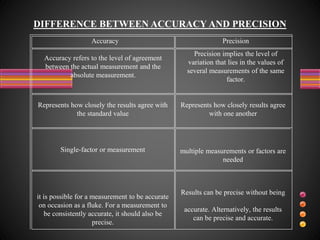
Accuracy is a critical aspect of analytical chemistry that plays a vital role in ensuring the reliability and validity of experimental results. In the field of analytical chemistry, accuracy refers to how close a measured value is to the true value or the target value.
Accurate analytical measurements are essential for making informed decisions, drawing meaningful conclusions, and solving real-world problems. Whether it’s quantifying the concentration of a compound in a sample or determining the purity of a substance, accuracy is paramount.
Several factors can influence the accuracy of analytical measurements, including instrumental errors, human errors, sample preparation techniques, and environmental conditions. It is crucial for analysts to be aware of these factors and take appropriate measures to minimise their impact on the accuracy of their results.
One common method used to assess accuracy in analytical chemistry is through calibration. By calibrating instruments with known standards and performing validation tests, analysts can ensure that their measurements are accurate and reliable.
Accuracy is closely related to precision, another important concept in analytical chemistry. While accuracy refers to how close a measured value is to the true value, precision refers to how close repeated measurements are to each other. Both accuracy and precision are essential for producing high-quality analytical data.
In conclusion, accuracy in analytical chemistry is crucial for obtaining reliable results that can be trusted and used with confidence. By prioritising accuracy in experimental procedures, analysts can contribute to advancements in various fields such as healthcare, environmental monitoring, food safety, and more.
The Importance of Accuracy in Analytical Chemistry: Ensuring Reliability, Precision, and Advancement
- Accurate analytical measurements lead to reliable and trustworthy experimental results.
- Enhanced accuracy ensures that decisions based on analytical data are well-informed and precise.
- Accurate analysis helps in identifying and quantifying substances present in a sample with high confidence.
- Improved accuracy in analytical chemistry contributes to the advancement of scientific research and technological developments.
- Accurate measurements enable scientists to detect subtle changes, trends, or anomalies in samples that may have significant implications.
Challenges to Accuracy in Analytical Chemistry: Addressing Instrumental, Human, and Environmental Factors
- Instrumental errors can lead to inaccuracies in measurements.
- Human errors, such as improper technique or misreading results, can affect accuracy.
- Sample contamination can introduce errors and compromise the accuracy of analytical data.
- Environmental factors, such as temperature and humidity, can impact the accuracy of measurements.
- Calibration drift over time can result in inaccuracies if instruments are not regularly calibrated.
- Interference from impurities or other compounds in the sample can distort results and reduce accuracy.
- Inadequate training or lack of experience among analysts may lead to errors that affect the overall accuracy of analytical chemistry processes.
Accurate analytical measurements lead to reliable and trustworthy experimental results.
Accurate analytical measurements are the cornerstone of producing reliable and trustworthy experimental results in the field of analytical chemistry. When measurements are precise and closely aligned with the true value, researchers can have confidence in the validity of their findings. This high level of accuracy not only enhances the credibility of scientific studies but also ensures that decisions based on the results are well-informed and impactful. By prioritising accuracy in analytical chemistry, researchers can uphold the integrity of their work and contribute valuable insights to their respective fields.
Enhanced accuracy ensures that decisions based on analytical data are well-informed and precise.
Enhanced accuracy in analytical chemistry plays a crucial role in ensuring that decisions based on analytical data are well-informed and precise. By obtaining accurate measurements and results, analysts can confidently draw conclusions, make predictions, and take appropriate actions. Whether it’s determining the quality of a pharmaceutical product or monitoring environmental pollutants, the precision provided by accurate analytical data empowers decision-makers to implement effective strategies and solutions with confidence. Ultimately, enhanced accuracy in analytical chemistry enables stakeholders to have a deeper understanding of complex systems and make informed choices that drive progress and innovation.
Accurate analysis helps in identifying and quantifying substances present in a sample with high confidence.
Accurate analysis in analytical chemistry plays a crucial role in identifying and quantifying substances present in a sample with high confidence. By ensuring that measurements closely reflect the true values of the substances, analysts can confidently determine the composition and concentration of compounds in a sample. This level of accuracy not only provides valuable insights into the characteristics of the sample but also enables researchers to make informed decisions based on reliable data. The ability to identify and quantify substances with precision enhances the credibility and usefulness of analytical results, making accurate analysis an indispensable tool in various scientific disciplines and industries.
Improved accuracy in analytical chemistry contributes to the advancement of scientific research and technological developments.
Enhanced accuracy in analytical chemistry plays a pivotal role in driving forward scientific research and technological progress. By ensuring that measurements are precise and reliable, researchers can make sound conclusions, develop innovative solutions, and push the boundaries of knowledge. The ability to trust the accuracy of analytical data enables scientists to explore new frontiers, discover novel compounds, and create cutting-edge technologies that have the potential to revolutionise industries and improve the quality of life for people around the world.
Accurate measurements enable scientists to detect subtle changes, trends, or anomalies in samples that may have significant implications.
Accurate measurements in analytical chemistry play a pivotal role in enabling scientists to detect subtle changes, trends, or anomalies in samples that may have significant implications. By ensuring precision and reliability in their measurements, scientists can identify even the slightest variations in sample composition or properties. These subtle changes could hold valuable information about the characteristics of a substance, the presence of impurities, or the effects of external factors. Such insights can lead to a deeper understanding of chemical processes, aid in quality control measures, and uncover critical information that may have far-reaching consequences in various scientific disciplines.
Instrumental errors can lead to inaccuracies in measurements.
Instrumental errors pose a significant con in analytical chemistry as they have the potential to introduce inaccuracies in measurements. These errors can arise from various sources, such as calibration issues, malfunctioning equipment, or improper instrument settings. When instrumental errors occur, they can result in misleading data that may lead to incorrect conclusions or decisions. Analysts must be vigilant in identifying and addressing instrumental errors to ensure the accuracy and reliability of their analytical results.
Human errors, such as improper technique or misreading results, can affect accuracy.
Human errors pose a significant con in the realm of accuracy in analytical chemistry. Mistakes such as improper technique during sample preparation or misreading and recording results can have a detrimental impact on the accuracy of analytical measurements. These errors can introduce inaccuracies into the data, leading to flawed conclusions and potentially misleading interpretations. It is crucial for analysts to be vigilant, well-trained, and attentive to detail to minimise the risk of human errors and uphold the integrity of analytical results.
Sample contamination can introduce errors and compromise the accuracy of analytical data.
Sample contamination poses a significant con in analytical chemistry as it has the potential to introduce errors and undermine the accuracy of analytical data. Contamination can occur at various stages of the analytical process, from sample collection and preparation to analysis and storage. Even trace amounts of impurities or foreign substances can skew results, leading to misleading conclusions and inaccurate findings. Analysts must be vigilant in preventing and detecting sample contamination to ensure the reliability and validity of their analytical measurements.
Environmental factors, such as temperature and humidity, can impact the accuracy of measurements.
Environmental factors, such as temperature and humidity, pose a significant challenge to the accuracy of measurements in analytical chemistry. Fluctuations in temperature can affect the performance of analytical instruments and lead to variations in results. High humidity levels can introduce moisture into samples, causing changes in their composition and properties. These environmental factors can compromise the reliability of analytical data, making it essential for analysts to monitor and control such conditions to ensure accurate and consistent measurements. Failure to address these environmental influences can result in misleading conclusions and erroneous decisions based on flawed data.
Calibration drift over time can result in inaccuracies if instruments are not regularly calibrated.
One significant con of accuracy in analytical chemistry is the potential for calibration drift over time, leading to inaccuracies if instruments are not regularly calibrated. Calibration drift occurs when the accuracy of an instrument deviates from its initial calibration settings due to factors such as wear and tear, environmental conditions, or component degradation. If instruments are not routinely calibrated and adjusted to account for calibration drift, the reliability and validity of analytical results may be compromised. This highlights the importance of regular instrument maintenance and calibration schedules to ensure consistent and accurate measurements in analytical chemistry practices.
Interference from impurities or other compounds in the sample can distort results and reduce accuracy.
Interference from impurities or other compounds present in the sample can significantly impact the accuracy of analytical chemistry measurements. These impurities or compounds can lead to distorted results, making it challenging to obtain precise and reliable data. The presence of interferences can skew the measurements, affecting the identification and quantification of the target analyte. Analysts must carefully consider and address potential interferences to minimise their effects and ensure the accuracy of their analytical findings.
Inadequate training or lack of experience among analysts may lead to errors that affect the overall accuracy of analytical chemistry processes.
Inadequate training or lack of experience among analysts can significantly compromise the accuracy of analytical chemistry processes. Without proper training, analysts may struggle to perform techniques correctly, interpret results accurately, or troubleshoot issues effectively. This lack of expertise can lead to errors in sample preparation, instrument calibration, data analysis, and overall experimental procedures. Ultimately, these errors can introduce inaccuracies into the results and undermine the reliability of analytical measurements. Investing in comprehensive training programmes and continuous professional development for analysts is crucial to uphold the standards of accuracy in analytical chemistry practices.