
The Importance of Accuracy and Precision in Quality Control
Quality control is a crucial aspect of any manufacturing process. It ensures that products meet the required standards and specifications before they reach the customers. Two key elements of quality control are accuracy and precision.
Accuracy
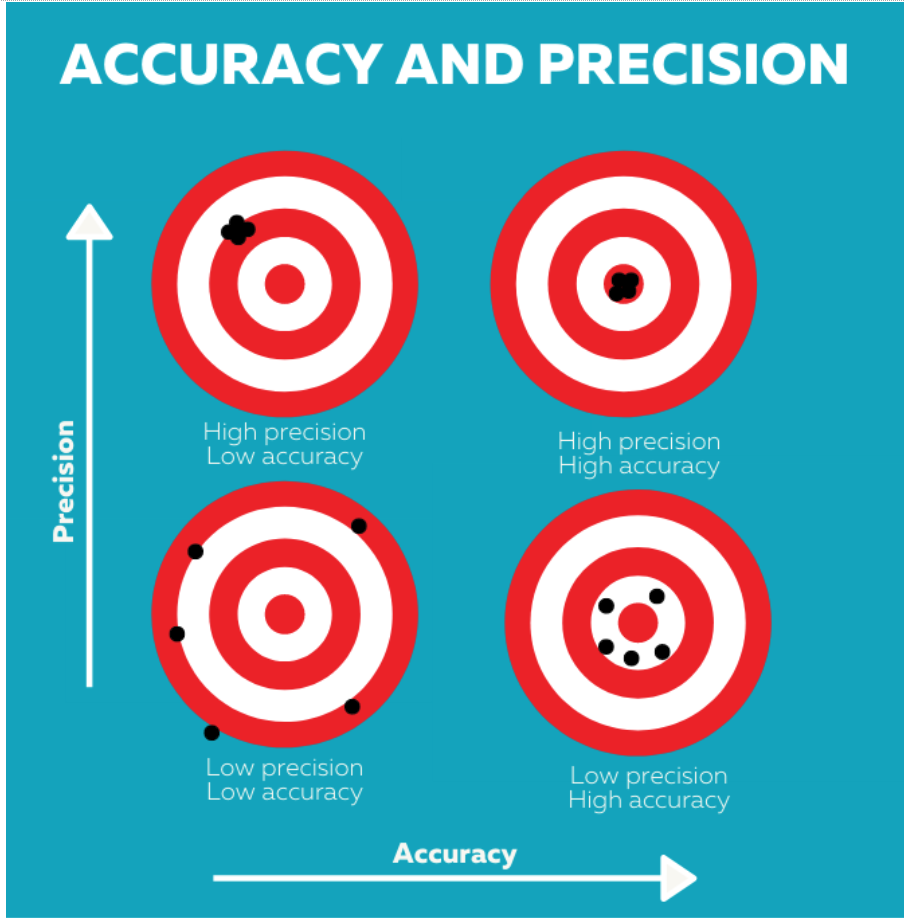
Accuracy refers to how close a measured value is to the true value. In quality control, accuracy ensures that products are manufactured to meet the desired specifications. A high level of accuracy means that the measurements taken are reliable and consistent.
Precision
Precision, on the other hand, focuses on the consistency of measurements when repeated under the same conditions. A process that is precise will produce similar results each time it is carried out. Precision helps in detecting variations in quality and ensures that products are consistent in their characteristics.
Relationship between Accuracy and Precision
While accuracy and precision are related concepts, they are not interchangeable. A measurement can be accurate but not precise if it consistently gives results close to the true value but with high variability. Conversely, a measurement can be precise but not accurate if it consistently gives similar results that are far from the true value.
Impact on Quality Control
In quality control, both accuracy and precision play a vital role in ensuring that products meet the required standards. Accurate measurements help in determining whether a product meets its specifications, while precision helps in detecting variations or defects within a batch of products.
Conclusion
Accuracy and precision are essential components of quality control processes. By maintaining high levels of accuracy and precision, manufacturers can ensure that their products are consistent in quality and meet customer expectations. Investing in accurate measuring tools and processes can lead to improved product quality, customer satisfaction, and ultimately, business success.
Understanding Accuracy and Precision: Key Insights for Quality Control FAQs
- What is the difference between accuracy and precision in quality control?
- How do accuracy and precision impact quality control processes?
- Why are accuracy and precision important in quality control?
- Can a measurement be accurate but not precise? Explain.
- What tools or methods can be used to ensure accuracy and precision in quality control?
- How can companies improve both accuracy and precision in their quality control procedures?
What is the difference between accuracy and precision in quality control?
In quality control, the difference between accuracy and precision is crucial to understand. Accuracy refers to how close a measured value is to the true value, ensuring that products are manufactured to meet desired specifications. Precision, on the other hand, focuses on the consistency of measurements when repeated under the same conditions, detecting variations in quality and ensuring product consistency. While accuracy relates to correctness, precision deals with repeatability. Both accuracy and precision are essential in quality control processes to guarantee that products meet required standards and specifications effectively.
How do accuracy and precision impact quality control processes?
Accuracy and precision are fundamental factors that significantly influence quality control processes. Accuracy ensures that measurements and evaluations are close to the true value, allowing for products to meet the desired specifications effectively. On the other hand, precision focuses on the consistency and repeatability of measurements, enabling the detection of variations and ensuring product uniformity. Together, accuracy and precision play a crucial role in maintaining high-quality standards, identifying defects or deviations early on, and ultimately enhancing overall product quality in quality control processes.
Why are accuracy and precision important in quality control?
Accuracy and precision are fundamental in quality control as they ensure that products meet the required standards and specifications consistently. Accuracy is crucial for determining how close a measured value is to the true value, guaranteeing that products are manufactured to meet desired specifications. Precision, on the other hand, focuses on the consistency of measurements, detecting variations and ensuring product uniformity. Together, accuracy and precision help in maintaining product quality, identifying defects early on, and ultimately satisfying customer expectations. In quality control, the importance of accuracy and precision cannot be overstated as they form the foundation for delivering reliable and consistent products to consumers.
Can a measurement be accurate but not precise? Explain.
In quality control, it is possible for a measurement to be accurate but not precise. Accuracy refers to how close a measured value is to the true value, while precision focuses on the consistency of measurements when repeated under the same conditions. A measurement can be accurate but not precise if it consistently gives results that are close to the true value but with high variability or inconsistency. In this case, while the average of the measurements may be close to the desired value, the individual measurements may vary widely from each other. This lack of consistency in precision can indicate potential issues in the measurement process that need to be addressed to ensure reliable and repeatable results in quality control practices.
What tools or methods can be used to ensure accuracy and precision in quality control?
When it comes to ensuring accuracy and precision in quality control, various tools and methods can be utilised to maintain high standards in manufacturing processes. One common tool is the use of calibrated measuring instruments, such as micrometers, calipers, or digital scales, to accurately measure dimensions and quantities. Statistical process control (SPC) techniques can also be employed to monitor and control manufacturing processes, ensuring consistency and identifying deviations from desired specifications. Additionally, implementing standard operating procedures (SOPs) and regular training for operators can help in achieving uniformity and precision in quality control practices. By combining these tools and methods effectively, organisations can enhance their quality control processes and deliver products that meet stringent accuracy and precision requirements.
How can companies improve both accuracy and precision in their quality control procedures?
Companies can enhance both accuracy and precision in their quality control procedures by implementing several key strategies. Firstly, investing in advanced measurement tools and technologies can significantly improve the accuracy of measurements taken during the manufacturing process. Calibration of equipment regularly is also crucial to ensure that measurements are precise and consistent. Additionally, providing comprehensive training to employees on proper measurement techniques and quality control procedures can help minimise errors and improve overall accuracy and precision. Implementing robust quality assurance processes, conducting regular audits, and seeking feedback from customers can further enhance the effectiveness of quality control procedures, leading to higher levels of product quality and customer satisfaction.