
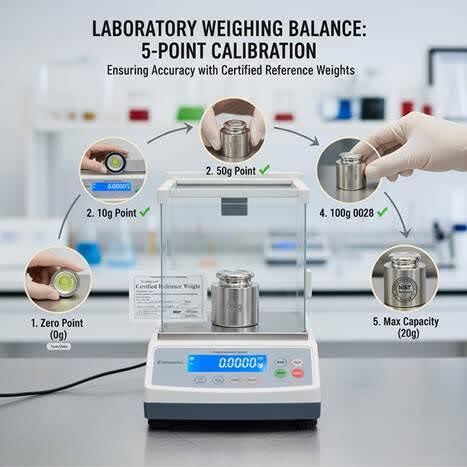
The Importance of Accuracy in Analytical Balances
Analytical balances are essential tools in scientific research, pharmaceutical laboratories, and various industries where precision is crucial. The accuracy of an analytical balance is paramount in obtaining reliable and consistent results.
One of the key factors that contribute to the accuracy of an analytical balance is its calibration. Regular calibration ensures that the balance is functioning correctly and providing precise measurements. Even minor deviations in calibration can lead to significant errors in measurements, affecting the integrity of the results.
Proper handling and maintenance of analytical balances are also critical for ensuring accuracy. Factors such as dust accumulation, temperature fluctuations, and improper use can impact the performance of the balance. Regular cleaning, storage in a controlled environment, and following correct weighing procedures are essential practices to maintain accuracy.
When using an analytical balance, it is important to consider factors that may affect its accuracy, such as air currents, static electricity, and vibrations. These external influences can cause fluctuations in weight readings and compromise the reliability of measurements. Minimising these factors by working in a stable environment and using anti-static measures can help improve accuracy.
Investing in a high-quality analytical balance from reputable manufacturers is another way to ensure accuracy. Modern analytical balances often come equipped with advanced features such as built-in calibration tools, automatic adjustment functions, and digital displays for precise readings.
In conclusion, maintaining the accuracy of an analytical balance is essential for obtaining trustworthy results in scientific experiments, quality control processes, and other applications where precision matters. By prioritising calibration, proper handling, environmental control, and investing in quality equipment, users can maximise the accuracy and reliability of their analytical balances.
Nine Advantages of Analytical Balance Accuracy: Precision, Quality, and Compliance in Scientific and Industrial Applications
- Ensures precise measurements for scientific research
- Facilitates accurate formulation of pharmaceutical products
- Improves quality control in manufacturing processes
- Enables consistent results in analytical chemistry
- Enhances the reliability of forensic investigations
- Aids in determining the purity of substances with high accuracy
- Supports compliance with regulatory standards and requirements
- Helps identify small variations in sample weights for critical analyses
- Contributes to the overall efficiency and effectiveness of laboratory operations
Seven Factors Undermining the Accuracy of Analytical Balances
- Calibration errors can lead to inaccurate measurements.
- External factors such as air currents and vibrations can affect the balance’s accuracy.
- Improper handling and maintenance can result in unreliable results.
- Inconsistent temperature conditions may impact the balance’s precision.
- Static electricity interference can cause fluctuations in weight readings.
- Low-quality or poorly calibrated balances may provide inaccurate data.
- Complexity of operation may lead to user errors affecting accuracy.
Ensures precise measurements for scientific research
The pro of accuracy in analytical balance, particularly in scientific research, lies in its ability to ensure precise measurements. In the realm of scientific exploration and experimentation, the reliability of data is paramount. An accurately calibrated analytical balance plays a vital role in providing researchers with trustworthy and consistent measurements. By eliminating errors and inaccuracies in weight readings, scientists can confidently analyse their findings, draw meaningful conclusions, and advance our understanding of the world around us.
Facilitates accurate formulation of pharmaceutical products
The accuracy of analytical balances plays a crucial role in facilitating the precise formulation of pharmaceutical products. In the pharmaceutical industry, where even the smallest variation can have significant implications on product efficacy and safety, reliable measurements are essential. By ensuring that the ingredients are weighed with utmost precision using analytical balances, pharmaceutical companies can maintain consistency in their formulations and adhere to strict quality standards. This accuracy not only helps in achieving the desired potency and dosage of medications but also contributes to ensuring patient safety and regulatory compliance.
Improves quality control in manufacturing processes
The high level of accuracy provided by analytical balances plays a crucial role in enhancing quality control within manufacturing processes. By ensuring precise measurements of raw materials, components, and finished products, analytical balances help manufacturers maintain consistency and adherence to strict quality standards. This accuracy enables manufacturers to detect any deviations or variations in the production process promptly, allowing for timely adjustments to prevent defects or inconsistencies in the final products. Ultimately, the use of accurate analytical balances contributes to improved product quality, customer satisfaction, and overall efficiency in manufacturing operations.
Enables consistent results in analytical chemistry
The precision and accuracy of analytical balances play a crucial role in enabling consistent results in analytical chemistry. By providing accurate measurements with minimal margin for error, analytical balances ensure that experiments, tests, and analyses yield reliable and reproducible outcomes. This consistency is essential in scientific research and quality control processes, where even the slightest variation can have significant implications. With the assurance of precise measurements from an accurate analytical balance, chemists and researchers can confidently make informed decisions based on consistent data, ultimately advancing our understanding of the world around us.
Enhances the reliability of forensic investigations
The precision and accuracy of analytical balances play a crucial role in enhancing the reliability of forensic investigations. In forensic science, even the smallest discrepancies in measurements can have significant implications on the outcome of an investigation. By using accurately calibrated analytical balances, forensic scientists can ensure that their findings are based on precise and consistent measurements, ultimately increasing the credibility and trustworthiness of the evidence presented in court. The reliability of analytical balances in forensic investigations is paramount in upholding justice and ensuring that accurate conclusions are drawn from scientific analyses.
Aids in determining the purity of substances with high accuracy
The exceptional accuracy of analytical balances plays a crucial role in determining the purity of substances with unparalleled precision. By providing highly accurate measurements, analytical balances enable researchers and scientists to assess the purity of substances with confidence and reliability. This level of accuracy is essential in various industries, such as pharmaceuticals and chemistry, where even minor impurities can have significant consequences. The ability of analytical balances to deliver precise results aids in ensuring the quality and integrity of substances, allowing for informed decision-making based on reliable data.
Supports compliance with regulatory standards and requirements
Ensuring the accuracy of analytical balances plays a crucial role in supporting compliance with regulatory standards and requirements. In industries such as pharmaceuticals, food production, and environmental testing, strict regulations govern the precision of measurements and data integrity. By maintaining accurate analytical balances through regular calibration and proper handling, organisations can demonstrate adherence to regulatory standards, enhance quality control processes, and uphold the credibility of their operations. Reliable measurements from accurately calibrated analytical balances not only contribute to meeting regulatory requirements but also instil confidence in the validity of results obtained for compliance purposes.
Helps identify small variations in sample weights for critical analyses
The high level of accuracy provided by analytical balances plays a crucial role in identifying small variations in sample weights for critical analyses. By ensuring precise measurements, analytical balances enable researchers and analysts to detect even the slightest changes in sample weights, which is essential for conducting meticulous and accurate analyses. This capability allows for the detection of subtle differences that may have significant implications in various scientific experiments, quality control processes, and research studies where attention to detail is paramount.
Contributes to the overall efficiency and effectiveness of laboratory operations
The high level of accuracy provided by analytical balances significantly contributes to the overall efficiency and effectiveness of laboratory operations. By ensuring precise measurements, analytical balances help researchers and lab technicians obtain reliable data quickly and accurately. This reliability reduces the need for repeated experiments due to measurement errors, saving valuable time and resources. With accurate results from analytical balances, laboratory processes can be streamlined, leading to improved productivity and the ability to make informed decisions based on trustworthy data.
Calibration errors can lead to inaccurate measurements.
Calibration errors in analytical balances pose a significant con as they have the potential to result in inaccurate measurements. When an analytical balance is not properly calibrated or if calibration is overlooked, even minor deviations can lead to substantial inaccuracies in weight readings. This can have serious implications in scientific research, pharmaceutical laboratories, and industrial settings where precision is crucial. Inaccurate measurements due to calibration errors can compromise the integrity of results, leading to flawed conclusions and potentially costly mistakes. It is imperative to address and rectify calibration errors promptly to maintain the accuracy and reliability of analytical balance measurements.
External factors such as air currents and vibrations can affect the balance’s accuracy.
External factors such as air currents and vibrations pose a significant challenge to the accuracy of analytical balances. Air currents can cause fluctuations in weight readings, leading to inconsistent results and potential errors in measurements. Similarly, vibrations from nearby equipment or foot traffic can disrupt the balance’s stability, impacting its ability to provide precise readings. To mitigate these concurring issues, it is imperative to work in a controlled environment free from disturbances and implement measures to minimise the effects of air currents and vibrations on the analytical balance.
Improper handling and maintenance can result in unreliable results.
Improper handling and maintenance of analytical balances pose a significant con in terms of accuracy, as they can lead to unreliable results. Factors such as inadequate cleaning, exposure to harsh environmental conditions, and incorrect usage practices can all contribute to the degradation of the balance’s performance. Without proper care and maintenance, the balance may drift out of calibration, experience mechanical issues, or be susceptible to errors that compromise the accuracy of measurements. It is essential for users to adhere to recommended handling procedures and maintenance protocols to ensure the reliability and precision of analytical balance readings.
Inconsistent temperature conditions may impact the balance’s precision.
Inconsistent temperature conditions pose a significant con in maintaining the accuracy of an analytical balance. Fluctuations in temperature can affect the balance’s performance by causing thermal expansion or contraction of its components, leading to variations in measurements. This impact on precision can result in unreliable results and compromise the integrity of experiments or quality control processes. It is crucial to address temperature control issues by working in a stable environment with controlled temperature conditions to minimise the negative effects on the analytical balance’s accuracy.
Static electricity interference can cause fluctuations in weight readings.
Static electricity interference is a significant con that can compromise the accuracy of analytical balance readings. When static electricity builds up on the balance or the sample being weighed, it can lead to fluctuations in weight measurements, resulting in inaccurate results. This interference poses a challenge for users who rely on precise measurements for their work, highlighting the importance of controlling static electricity in the laboratory environment to maintain the integrity of data and ensure reliable outcomes.
Low-quality or poorly calibrated balances may provide inaccurate data.
Low-quality or poorly calibrated analytical balances pose a significant con as they have the potential to yield inaccurate data. When using such balances, there is a risk of obtaining unreliable measurements that can lead to erroneous conclusions and decisions. Inaccurate data resulting from low-quality or improperly calibrated balances can compromise the integrity of experiments, research studies, and quality control processes, ultimately hindering progress and potentially causing costly errors. It is imperative to invest in high-quality analytical balances and ensure regular calibration to mitigate the risk of inaccuracies and maintain the credibility of results.
Complexity of operation may lead to user errors affecting accuracy.
The complexity of operation of analytical balances can pose a significant con as it may increase the likelihood of user errors that can ultimately impact accuracy. The intricate features and functions of analytical balances, such as calibration procedures and weighing protocols, require users to have a thorough understanding and expertise in operating the equipment correctly. Inadequate training or lack of familiarity with the balance’s operation can lead to mistakes in measurement processes, calibration adjustments, or data recording, resulting in inaccurate results. Therefore, the complexity of using analytical balances highlights the importance of comprehensive training and ongoing support to minimise user errors and maintain the desired level of accuracy in measurements.