
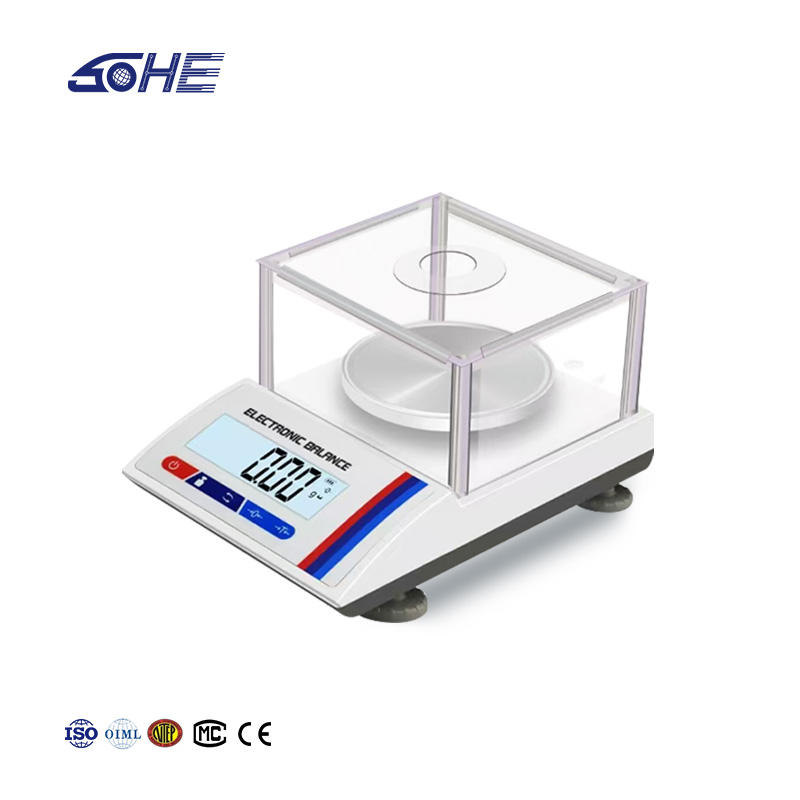
The Importance of Analytical Scale Accuracy
When it comes to analytical measurements, precision and accuracy are paramount. Analytical scales play a crucial role in various industries, including pharmaceuticals, food production, research laboratories, and more. The accuracy of an analytical scale directly impacts the quality and reliability of the data obtained from measurements.
One of the key reasons why analytical scale accuracy is essential is its impact on the validity of experimental results. In scientific research, even a small error in measurement can lead to significant deviations in outcomes. An inaccurate scale can introduce errors that may affect the conclusions drawn from an experiment.
Furthermore, in industries such as pharmaceuticals and food production, adherence to strict quality control standards is vital. Analytical scales are used to measure precise quantities of ingredients or substances to ensure product consistency and safety. Any inaccuracies in these measurements can have serious consequences, leading to product defects or health risks.
Calibration is a critical aspect of maintaining analytical scale accuracy. Regular calibration ensures that the scale is functioning correctly and providing accurate measurements. It involves comparing the scale’s readings against known reference weights to identify any deviations and make necessary adjustments.
Another factor that influences analytical scale accuracy is environmental conditions. Factors such as temperature fluctuations, air currents, and vibrations can affect the performance of an analytical scale. It is essential to operate the scale in a controlled environment to minimise external influences on its accuracy.
In conclusion, ensuring analytical scale accuracy is vital for obtaining reliable data, maintaining product quality standards, and upholding scientific integrity. By investing in high-quality scales, conducting regular calibrations, and operating them in optimal conditions, businesses and researchers can achieve precise and trustworthy results.
Six Benefits of Analytical Scale Accuracy: Ensuring Precision and Integrity Across Industries
- Ensures reliable and trustworthy experimental results.
- Maintains high product quality standards in industries like pharmaceuticals and food production.
- Facilitates precise measurements of ingredients or substances for consistency and safety.
- Helps in identifying small deviations that can have significant impacts on outcomes.
- Contributes to upholding scientific integrity by minimising measurement errors.
- Enhances data accuracy and validity, leading to informed decision-making.
Challenges in Ensuring Analytical Scale Accuracy: Potential Impacts and Maintenance Considerations
- Even minor inaccuracies in analytical scale measurements can lead to significant errors in experimental results.
- Maintaining analytical scale accuracy requires regular calibration, which can be time-consuming and costly.
- External factors such as temperature fluctuations and vibrations can impact the accuracy of analytical scales.
- Inaccurate measurements from an analytical scale can result in product defects or compromised safety standards in industries like pharmaceuticals and food production.
- Calibrating analytical scales incorrectly or infrequently can lead to persistent inaccuracies that affect data reliability.
- The complexity of operating and maintaining high-precision analytical scales may require specialised training for users.
Ensures reliable and trustworthy experimental results.
The pro of analytical scale accuracy that stands out is its ability to ensure reliable and trustworthy experimental results. By using precise and calibrated analytical scales, researchers can obtain accurate measurements of substances and quantities, leading to data that is consistent and dependable. This reliability is crucial in scientific experiments where the validity of results is paramount. With analytical scale accuracy, researchers can have confidence in the integrity of their data, enabling them to draw meaningful conclusions and make informed decisions based on solid evidence.
Maintains high product quality standards in industries like pharmaceuticals and food production.
Analytical scale accuracy plays a crucial role in maintaining high product quality standards in industries such as pharmaceuticals and food production. By ensuring precise measurements of ingredients and substances, analytical scales help to guarantee consistency and safety in the final products. Accurate measurements enable manufacturers to adhere to strict quality control regulations, reducing the risk of errors that could compromise the integrity of pharmaceuticals or food items. The reliability provided by analytical scale accuracy is essential for upholding product quality standards and meeting regulatory requirements in these critical industries.
Facilitates precise measurements of ingredients or substances for consistency and safety.
The pro of analytical scale accuracy lies in its ability to facilitate precise measurements of ingredients or substances, ensuring consistency and safety in various industries. By providing accurate weight measurements, analytical scales enable businesses in sectors such as pharmaceuticals and food production to maintain product quality standards and adhere to strict regulatory requirements. The precise measurement of ingredients not only ensures product consistency but also plays a crucial role in guaranteeing the safety of consumers by preventing potential health risks associated with incorrect dosages or formulations.
Helps in identifying small deviations that can have significant impacts on outcomes.
The precision of analytical scale accuracy plays a crucial role in identifying even the smallest deviations that could have substantial impacts on outcomes. By providing precise measurements, analytical scales enable researchers and professionals to detect subtle variations in data that may otherwise go unnoticed. These small deviations, when identified and addressed early on, can prevent errors from propagating and ultimately lead to more accurate results and informed decision-making. The ability of analytical scales to highlight such minute differences underscores their importance in ensuring the reliability and integrity of experimental findings and product quality standards.
Contributes to upholding scientific integrity by minimising measurement errors.
The precision and accuracy of analytical scales play a crucial role in upholding scientific integrity by minimising measurement errors. By ensuring that measurements are conducted with the highest level of accuracy, analytical scales help researchers obtain reliable and trustworthy data. Minimising errors in measurements not only enhances the credibility of scientific findings but also allows for more accurate interpretations and conclusions to be drawn from experimental results. Scientific integrity is preserved when analytical scale accuracy is prioritised, leading to a solid foundation for advancing knowledge and innovation in various fields of study.
Enhances data accuracy and validity, leading to informed decision-making.
The pro of analytical scale accuracy lies in its ability to enhance data accuracy and validity, ultimately contributing to informed decision-making processes. By ensuring that measurements are precise and reliable, analytical scales enable researchers, scientists, and professionals to generate trustworthy data that forms the basis for sound conclusions and strategic choices. With accurate measurements from analytical scales, stakeholders can make informed decisions with confidence, knowing that the data they rely on is dependable and reflective of the true values being measured.
Even minor inaccuracies in analytical scale measurements can lead to significant errors in experimental results.
Even minor inaccuracies in analytical scale measurements can have far-reaching consequences, casting doubt on the reliability of experimental results. The delicate balance of precision required in analytical measurements means that even the slightest deviation can result in significant errors that skew the outcomes of experiments. Researchers and professionals relying on analytical scales must remain vigilant and proactive in ensuring accuracy to avoid compromising the integrity of their findings and conclusions.
Maintaining analytical scale accuracy requires regular calibration, which can be time-consuming and costly.
One significant drawback of maintaining analytical scale accuracy is the need for regular calibration, a process that can be both time-consuming and costly. Calibration involves comparing the scale’s readings with known reference weights to ensure its accuracy. This task often requires specialised equipment and trained personnel to perform accurately. The time and resources dedicated to frequent calibrations can add up, impacting productivity and increasing operational expenses for businesses that rely on precise measurements from analytical scales.
External factors such as temperature fluctuations and vibrations can impact the accuracy of analytical scales.
External factors, such as temperature fluctuations and vibrations, pose a significant challenge to maintaining the accuracy of analytical scales. These environmental influences can introduce errors in measurements, leading to unreliable data and potentially skewed results. Temperature variations can cause the materials of the scale to expand or contract, affecting its calibration and performance. Similarly, vibrations from nearby equipment or activities can disrupt the delicate balance of the scale, resulting in inaccurate readings. It is crucial for users of analytical scales to be aware of these external factors and take necessary precautions to minimise their impact on the scale’s accuracy for precise and dependable measurements.
Inaccurate measurements from an analytical scale can result in product defects or compromised safety standards in industries like pharmaceuticals and food production.
Inaccurate measurements stemming from a lack of analytical scale accuracy pose a significant risk in industries such as pharmaceuticals and food production. The potential consequences of flawed measurements include product defects and compromised safety standards. In pharmaceutical manufacturing, even a slight deviation in ingredient quantities can lead to ineffective or harmful medications. Similarly, in food production, inaccuracies in measuring ingredients can result in products that do not meet quality standards or may pose health risks to consumers. Maintaining precise analytical scale accuracy is crucial to upholding the integrity and safety of products in these critical industries.
Calibrating analytical scales incorrectly or infrequently can lead to persistent inaccuracies that affect data reliability.
Improper or infrequent calibration of analytical scales poses a significant con in terms of accuracy. Failing to calibrate these scales correctly or on a regular basis can result in persistent inaccuracies that have a direct impact on the reliability of the data obtained from measurements. Inaccurate calibration can introduce systematic errors that skew results and compromise the validity of experimental findings. It is crucial for businesses and researchers to prioritise proper calibration practices to ensure that analytical scale accuracy is maintained at all times, thus safeguarding the integrity and trustworthiness of the data collected.
The complexity of operating and maintaining high-precision analytical scales may require specialised training for users.
The complexity of operating and maintaining high-precision analytical scales poses a significant challenge as it may necessitate specialised training for users. Users must be well-versed in the intricacies of handling such sensitive equipment to ensure accurate measurements. Without proper training, there is a risk of errors in calibration, handling, or data interpretation, which can compromise the reliability and validity of results. This need for specialised expertise adds an additional layer of complexity and cost to the use of high-precision analytical scales, making it essential for organisations to invest in training programmes to maximise the benefits of these advanced instruments.