
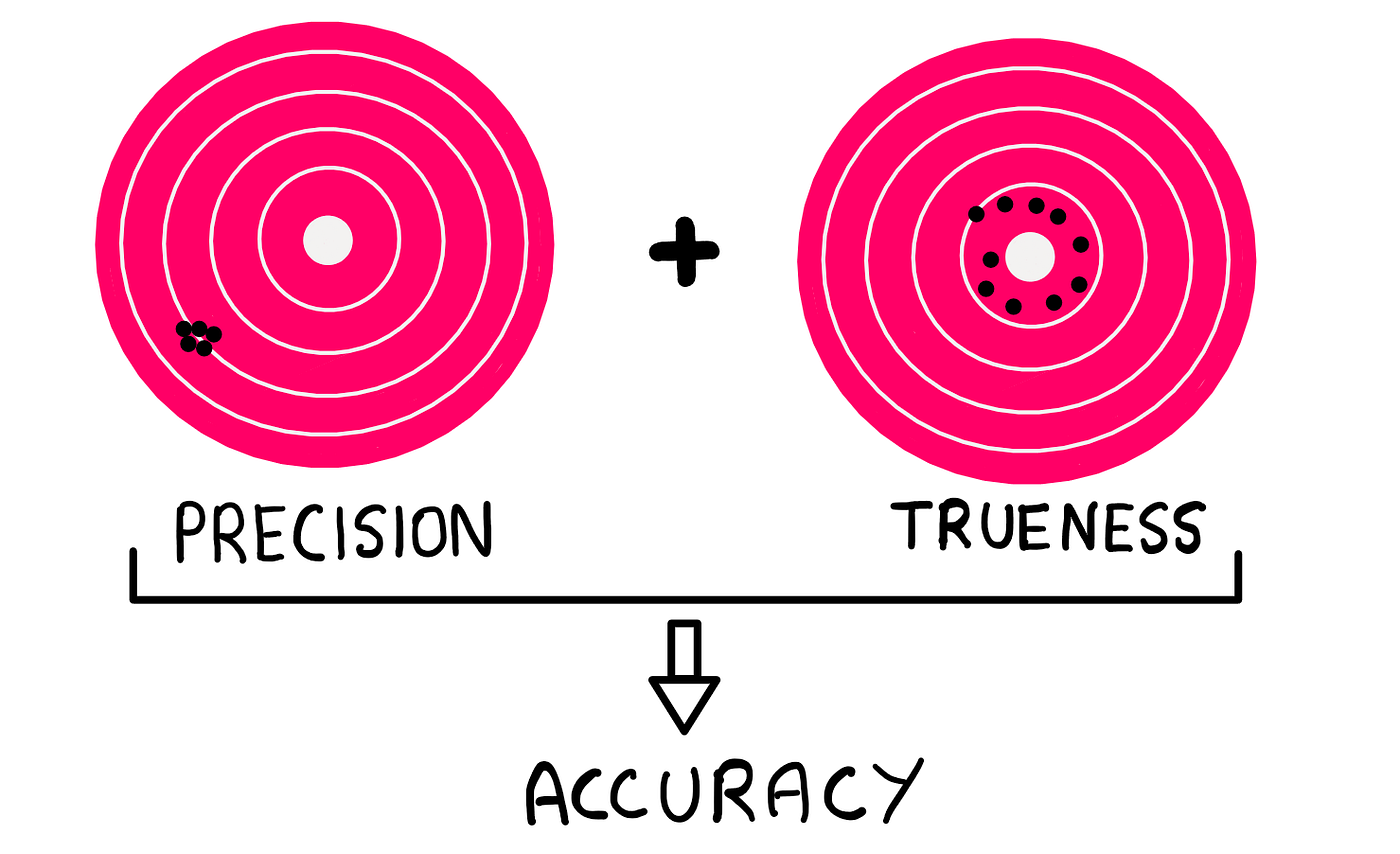
Understanding the Difference Between Accuracy and Precision
Accuracy and precision are two terms commonly used in various fields, including science, engineering, and statistics. While they may seem similar, they have distinct meanings and implications.
Accuracy
Accuracy refers to how close a measured value is to the true or accepted value of a quantity. In other words, it measures the degree of correctness of a measurement. A high level of accuracy indicates that the measured values are very close to the actual value.
Precision
Precision, on the other hand, refers to how close repeated measurements are to each other. It assesses the consistency or reproducibility of results. A high level of precision means that repeated measurements yield very similar results, even if they are not necessarily close to the true value.
Difference between Accuracy and Precision
The key difference between accuracy and precision lies in their focus. Accuracy deals with how close a measurement is to the true value, while precision focuses on the consistency of results regardless of their closeness to the true value.
Example
Imagine a target board where hitting the bullseye represents the true value. If all your shots land close to each other (high precision) but away from the bullseye (low accuracy), you have precision without accuracy. Conversely, if your shots cluster around the bullseye (high accuracy) but are spread out (low precision), you have accuracy without precision.
Conclusion
In conclusion, accuracy and precision are both essential aspects of making reliable measurements. Understanding their differences can help us interpret data correctly and make informed decisions based on our observations.
Understanding the Distinction: 9 Tips to Differentiate Between Accuracy and Precision
- Accuracy refers to how close a measured value is to the true or accepted value.
- Precision refers to how close repeated measurements are to each other.
- Accuracy is about correctness, while precision is about consistency.
- Aiming for accuracy means hitting the target, while aiming for precision means hitting the same spot repeatedly.
- An accurate measurement may not always be precise, and a precise measurement may not always be accurate.
- ‘Accurate’ relates to truthfulness, whereas ‘precise’ relates to exactness.
- ‘Accuracy’ involves minimising errors in measurements, while ‘precision’ involves minimising variations in repeated measurements.
- ‘Precision’ can be improved by reducing random errors, whereas ‘accuracy’ can be improved by reducing systematic errors.
- ‘Accuracy’ indicates how close a measurement is to a known value, while ‘precision’ indicates how reproducible the measurements are.
Accuracy refers to how close a measured value is to the true or accepted value.
In the realm of measurements and data analysis, accuracy plays a crucial role in determining the reliability of results. It signifies the proximity of a measured value to the true or accepted value of a quantity, reflecting the degree of correctness in our observations. The concept of accuracy guides us in understanding how well our measurements align with the actual values we aim to capture, highlighting the importance of striving for precision in our data collection processes.
Precision refers to how close repeated measurements are to each other.
Precision is a crucial concept that highlights the consistency and reproducibility of measurements. When we talk about precision, we are focusing on how closely repeated measurements align with each other. In essence, precision indicates the reliability and stability of results obtained through multiple trials. A high level of precision signifies that the data points are tightly clustered, showing minimal variability between each measurement. This emphasis on consistency is fundamental in various fields where exactness and repeatability are paramount for drawing accurate conclusions and making informed decisions based on reliable data.
Accuracy is about correctness, while precision is about consistency.
In understanding the disparity between accuracy and precision, it is crucial to recognise their distinct focuses. Accuracy pertains to the correctness of a measurement in relation to the true value, emphasising how close the observed value is to the actual one. On the other hand, precision centres on consistency, evaluating how closely repeated measurements align with each other, irrespective of their proximity to the true value. Therefore, accuracy concerns itself with being right, while precision concerns itself with being consistent in producing similar results.
Aiming for accuracy means hitting the target, while aiming for precision means hitting the same spot repeatedly.
When distinguishing between accuracy and precision, it is helpful to consider the analogy of target shooting. Aiming for accuracy involves hitting the intended target, representing how close a measured value is to the true value. On the other hand, aiming for precision entails hitting the same spot consistently with each shot, highlighting the reliability and consistency of measurements. This distinction emphasises the importance of both accuracy and precision in obtaining reliable and meaningful results across various disciplines.
An accurate measurement may not always be precise, and a precise measurement may not always be accurate.
An important tip to remember when distinguishing between accuracy and precision is that an accurate measurement does not guarantee precision, and a precise measurement does not necessarily ensure accuracy. This concept highlights the distinct nature of these two terms: accuracy reflects how close a measurement is to the true value, while precision indicates the consistency of results. Understanding this distinction is crucial in various fields where reliable and meaningful measurements are essential for making informed decisions and drawing valid conclusions.
‘Accurate’ relates to truthfulness, whereas ‘precise’ relates to exactness.
In the realm of measurements and data analysis, the distinction between accuracy and precision is crucial for ensuring reliable results. The term ‘accurate’ pertains to the truthfulness or closeness of a measured value to the actual or accepted value, reflecting the degree of correctness. On the other hand, ‘precise’ highlights the exactness and consistency of repeated measurements, irrespective of their proximity to the true value. Understanding this subtle yet significant contrast between accuracy and precision empowers individuals to make informed judgments based on both the reliability and consistency of their data.
‘Accuracy’ involves minimising errors in measurements, while ‘precision’ involves minimising variations in repeated measurements.
In the realm of measurements, the distinction between accuracy and precision is crucial. ‘Accuracy’ pertains to the effort of reducing errors in measurements, ensuring that the recorded values closely align with the true or accepted value of a quantity. On the other hand, ‘precision’ focuses on diminishing variations among repeated measurements, emphasising consistency and reproducibility in obtaining results. By understanding and applying these concepts effectively, individuals can enhance the reliability and validity of their measurement processes across various fields and disciplines.
‘Precision’ can be improved by reducing random errors, whereas ‘accuracy’ can be improved by reducing systematic errors.
In the realm of measurements and data analysis, it is important to differentiate between accuracy and precision. The tip highlights a crucial distinction: improving precision involves minimizing random errors that cause variability in repeated measurements, resulting in more consistent outcomes. On the other hand, enhancing accuracy entails mitigating systematic errors that lead to deviations from the true value, thereby ensuring that measurements are closer to the actual value being measured. By understanding and addressing these distinct types of errors, researchers and practitioners can strive for both precise and accurate results in their work.
‘Accuracy’ indicates how close a measurement is to a known value, while ‘precision’ indicates how reproducible the measurements are.
In the realm of measurements, the distinction between accuracy and precision holds significant importance. The term ‘accuracy’ denotes the proximity of a measurement to a known or accepted value, reflecting the degree of correctness in the result obtained. On the other hand, ‘precision’ highlights the consistency and reproducibility of measurements, showcasing how closely repeated measurements align with each other. Understanding this fundamental disparity is crucial in various fields, as it enables individuals to not only gauge the reliability of their data but also make informed decisions based on the quality and consistency of their measurements.