
The Importance of Data Accuracy and Precision
In the realm of data analysis, two key concepts play a crucial role in ensuring the reliability and validity of findings: data accuracy and precision. While these terms are often used interchangeably, they have distinct meanings that are essential to understand.
Data Accuracy
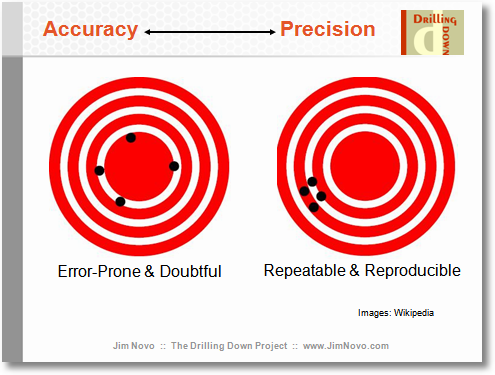
Data accuracy refers to how close a measured value is to the true value. In other words, accurate data is free from errors and represents the actual information being measured. Achieving high data accuracy involves thorough validation processes, careful data collection methods, and regular quality checks.
Accurate data is vital for making informed decisions, identifying trends, and drawing meaningful conclusions. Inaccurate data can lead to flawed analyses, incorrect assumptions, and ultimately, poor decision-making.
Data Precision
Data precision, on the other hand, relates to the consistency and reproducibility of measurements. Precise data is characterised by minimal variability between repeated measurements of the same quantity. Precision is crucial for detecting small changes or differences in data points.
High precision ensures that results are reliable and reproducible across multiple trials or observations. However, it’s important to note that precise data may not always be accurate if it consistently misses the true value due to systematic errors.
Conclusion
Both data accuracy and precision are fundamental aspects of effective data analysis. By striving for both accuracy and precision in your data collection and analysis processes, you can enhance the credibility of your findings and make more informed decisions based on reliable information.
Understanding Data Accuracy and Precision: Key Differences and Frequently Asked Questions
- How to remember the difference between accuracy and precision?
- What is accuracy and precision data example?
- What is the difference between accuracy and precision in data analysis?
- What is data precision?
- What is meant by precision of data?
- What is data accuracy?
- How to determine accuracy and precision of data?
- What is the difference between data accuracy and precision?
How to remember the difference between accuracy and precision?
When it comes to distinguishing between accuracy and precision in data analysis, a helpful mnemonic device can aid in remembering the key differences. One commonly used analogy is to think of accuracy as hitting the bullseye on a target, representing how close a measurement is to the true value. On the other hand, precision can be likened to consistently hitting the same spot on the target, indicating the level of variability or scatter in repeated measurements. By visualising accuracy as hitting the target and precision as clustering shots together, one can better grasp and retain the distinction between these essential concepts in data analysis.
What is accuracy and precision data example?
When discussing data accuracy and precision, it is important to understand the distinction between the two concepts. Accuracy refers to how close a measured value is to the true or target value, while precision relates to the consistency and reproducibility of measurements. An example that illustrates this difference is a target practice scenario: if a group of shots hits close to the bullseye (high accuracy) but are spread out in a tight cluster, they are considered precise. On the other hand, if the shots are scattered around the target (low precision) but clustered away from the bullseye (low accuracy), there is room for improvement in both accuracy and precision. This example highlights the significance of considering both accuracy and precision in data analysis to ensure reliable and meaningful results.
What is the difference between accuracy and precision in data analysis?
In data analysis, the distinction between accuracy and precision is a common query that arises among researchers and analysts. Accuracy refers to how close a measured value is to the true value, indicating the absence of errors and the faithfulness of data to reality. On the other hand, precision pertains to the consistency and reproducibility of measurements, highlighting the degree of variability between repeated measurements of the same quantity. Understanding this disparity is crucial in ensuring that data analyses yield reliable results and informed decision-making based on both accurate and precise information.
What is data precision?
Data precision refers to the consistency and reproducibility of measurements in a dataset. It indicates the level of detail and exactness in the values obtained from repeated measurements of the same quantity. In simpler terms, data precision reflects how closely individual data points align with each other when measured multiple times. High data precision is crucial for detecting subtle variations or changes in data and ensures that results are reliable and consistent across different trials or observations. Understanding and maintaining data precision is essential for generating accurate and dependable analyses in various fields, including scientific research, engineering, and data analysis.
What is meant by precision of data?
The precision of data refers to the consistency and reproducibility of measurements, indicating the level of exactness and detail in the data values. In essence, data precision reflects how closely repeated measurements of the same quantity align with each other. A high level of precision suggests minimal variability between these measurements, highlighting the reliability and consistency of the data points. Precision plays a crucial role in detecting subtle changes or differences in data, enabling researchers and analysts to draw more accurate conclusions and make informed decisions based on reliable information.
What is data accuracy?
Data accuracy refers to the degree to which data values reflect the true and correct information being measured. In essence, data accuracy indicates how close the collected data is to the actual values it intends to represent. Ensuring high data accuracy involves meticulous validation processes, precise data collection methods, and regular quality checks to minimise errors and discrepancies. Accurate data is essential for making reliable decisions, drawing meaningful insights, and generating trustworthy conclusions in various fields of analysis and research.
How to determine accuracy and precision of data?
Determining the accuracy and precision of data involves a systematic evaluation of the quality and reliability of the information collected. To assess accuracy, one must compare the measured values to a known standard or true value to identify any discrepancies or errors. Precision, on the other hand, is evaluated by examining the consistency and reproducibility of measurements through repeated trials or observations. Various statistical methods and tools, such as mean absolute error and standard deviation, can be utilised to quantify accuracy and precision levels. By conducting rigorous validation processes, employing appropriate measurement techniques, and analysing data variability, researchers can effectively determine the accuracy and precision of their data, ensuring the validity of their findings.
What is the difference between data accuracy and precision?
The frequently asked question regarding data accuracy and precision often revolves around understanding the distinction between the two concepts. Data accuracy refers to how closely a measured value aligns with the true or actual value being represented, highlighting the absence of errors in the data. On the other hand, data precision focuses on the consistency and reproducibility of measurements, emphasising the level of variability between repeated measurements of the same quantity. In essence, while accuracy reflects how close data points are to the target, precision indicates how closely those data points are clustered together. Both accuracy and precision play critical roles in ensuring reliable and valid data analysis, guiding decision-making processes based on trustworthy information.