
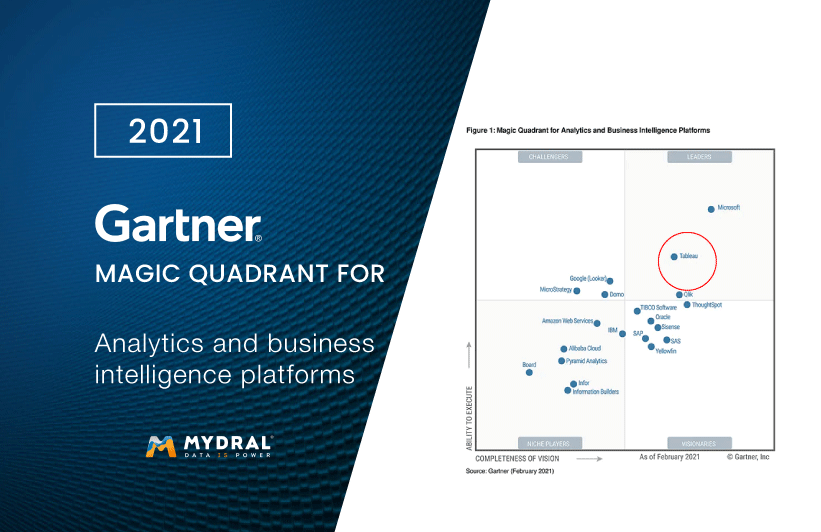
Gartner Magic Quadrant for Business Intelligence 2021: An Overview
The Gartner Magic Quadrant for Business Intelligence (BI) and Analytics Platforms is an influential research report that evaluates the capabilities of various BI vendors. In 2021, the report continued to provide valuable insights into the rapidly evolving landscape of BI tools, helping organisations make informed decisions about their analytics strategies.
Understanding the Magic Quadrant
The Magic Quadrant is a graphical representation that categorises vendors into four quadrants: Leaders, Challengers, Visionaries, and Niche Players. This classification helps organisations identify which vendors align best with their strategic goals and technological needs.
- Leaders: These vendors demonstrate a clear understanding of market needs and consistently execute well against their vision. They have strong market presence and are often considered safe choices.
- Challengers: Vendors in this quadrant have strong ability to execute but may lack a complete vision or innovation compared to Leaders.
- Visionaries: These vendors offer innovative products or services but may not yet have achieved full market penetration or execution strength.
- Niche Players: Vendors in this category specialise in specific use cases or industries but may not offer comprehensive solutions across all areas of BI.
Key Trends from the 2021 Report
The 2021 edition of the Gartner Magic Quadrant for BI highlighted several key trends shaping the industry:
Increased Focus on Augmented Analytics
The integration of artificial intelligence (AI) and machine learning (ML) into BI platforms has become increasingly important. Augmented analytics enables users to gain deeper insights through automated data preparation, insight generation, and visualisation recommendations.
User Experience and Accessibility
A significant emphasis has been placed on improving user experience by making platforms more intuitive and accessible to non-technical users. This trend reflects a growing demand for self-service analytics capabilities within organisations.
Cloud Adoption
The shift towards cloud-based BI solutions continues as businesses seek scalable, flexible options that can support remote work environments. Cloud platforms offer advantages such as reduced infrastructure costs and enhanced collaboration capabilities.
Notable Vendors in 2021
The Leaders quadrant featured several well-known names in 2021:
- Microsoft: With its Power BI platform, Microsoft maintained its leadership position by offering robust integration with other Microsoft products and a user-friendly interface.
- Tableau (a Salesforce company): Known for its strong visualisation capabilities, Tableau continued to be a popular choice among businesses seeking intuitive data exploration tools.
- SAP: SAP’s analytics cloud platform demonstrated strong execution capabilities with comprehensive features tailored to enterprise needs.
The Road Ahead
The Gartner Magic Quadrant for Business Intelligence remains an essential resource for organisations navigating the complex landscape of BI solutions. As technology continues to evolve, future reports will likely focus on emerging trends such as hyperautomation, advanced AI-driven analytics, and increased data governance requirements.
The insights provided by Gartner help businesses select the right tools to drive data-driven decision-making processes. By understanding where each vendor stands within the quadrant framework, companies can better align their technology investments with strategic objectives.
Key Advantages of the 2021 Gartner Magic Quadrant for Business Intelligence
- 1. Provides a comprehensive overview of the BI and analytics market landscape.
- 2. Helps organisations identify leading vendors based on their vision and execution capabilities.
- 3. Enables businesses to make informed decisions about selecting BI tools that align with their strategic goals.
- 4. Offers insights into emerging trends and technologies shaping the BI industry.
- 5. Assists in evaluating vendor strengths and weaknesses through a structured quadrant framework.
- 6. Highlights key features and functionalities of top BI platforms for comparison purposes.
- 7. Recognised as a trusted source of information by industry professionals and decision-makers.
- 8. Facilitates benchmarking of BI solutions to drive data-driven decision-making processes.
Criticisms of the 2021 Gartner Magic Quadrant for BI: Limited Scope, Subjectivity, Static Evaluation, and Cost Concerns
1. Provides a comprehensive overview of the BI and analytics market landscape.
The Gartner Magic Quadrant for Business Intelligence 2021 excels in providing a comprehensive overview of the BI and analytics market landscape. By evaluating a wide range of vendors and categorising them based on their completeness of vision and ability to execute, the report offers valuable insights into the current state of the industry. This detailed analysis enables organisations to gain a clear understanding of the competitive landscape, emerging trends, and key players in the BI market, empowering them to make informed decisions when selecting BI tools that align with their business objectives.
2. Helps organisations identify leading vendors based on their vision and execution capabilities.
The Gartner Magic Quadrant for Business Intelligence 2021 serves as a valuable resource for organisations seeking to identify leading vendors based on their vision and execution capabilities. By categorising vendors into distinct quadrants such as Leaders, Challengers, Visionaries, and Niche Players, the report offers a clear framework for evaluating the strengths and weaknesses of each vendor. This enables businesses to make informed decisions about which BI solutions align best with their strategic goals and technological requirements. The emphasis on both vision and execution ensures that organisations can select vendors that not only have a strong product roadmap but also demonstrate the ability to deliver on their promises effectively.
3. Enables businesses to make informed decisions about selecting BI tools that align with their strategic goals.
One significant advantage of the Gartner Magic Quadrant for Business Intelligence 2021 is its ability to empower businesses to make well-informed decisions when selecting BI tools that closely align with their strategic objectives. By providing a comprehensive evaluation of various vendors and categorising them based on their vision and execution capabilities, the Magic Quadrant equips organisations with valuable insights to choose the most suitable BI solution for their specific needs. This enables businesses to invest in tools that not only meet their current requirements but also support their long-term strategic goals, ultimately enhancing their decision-making processes and driving success in the ever-evolving world of data analytics.
4. Offers insights into emerging trends and technologies shaping the BI industry.
The Gartner Magic Quadrant for Business Intelligence 2021 excels in providing valuable insights into emerging trends and technologies that are shaping the BI industry. By highlighting the latest developments in the field, the report offers a forward-looking perspective that helps organisations stay ahead of the curve. Understanding these emerging trends is crucial for businesses looking to leverage cutting-edge technologies and innovative strategies to enhance their BI capabilities and drive informed decision-making processes.
5. Assists in evaluating vendor strengths and weaknesses through a structured quadrant framework.
One significant advantage of the Gartner Magic Quadrant for Business Intelligence 2021 is its ability to assist in evaluating vendor strengths and weaknesses through a structured quadrant framework. By categorising vendors into distinct quadrants based on their completeness of vision and ability to execute, this framework provides a clear and structured way for organisations to assess the capabilities of different BI vendors. This approach enables businesses to make informed decisions by comparing vendors side by side, identifying their relative strengths and weaknesses, and ultimately selecting the most suitable partner based on their specific needs and strategic objectives.
6. Highlights key features and functionalities of top BI platforms for comparison purposes.
One notable advantage of the Gartner Magic Quadrant for Business Intelligence 2021 is its ability to highlight key features and functionalities of the top BI platforms for comparison purposes. By providing a detailed analysis of the strengths and capabilities of leading vendors in the BI market, organisations can easily compare and contrast different platforms to determine which best aligns with their specific requirements. This feature enables businesses to make informed decisions when selecting a BI solution that not only meets their current needs but also supports their long-term strategic goals.
7. Recognised as a trusted source of information by industry professionals and decision-makers.
One of the notable advantages of the Gartner Magic Quadrant for Business Intelligence 2021 is its reputation as a trusted source of information among industry professionals and decision-makers. Being recognised for its credibility and reliability, the report holds significant influence in guiding organisations towards making informed choices when selecting BI vendors. Industry professionals and decision-makers value the insights provided by Gartner, relying on its thorough evaluations to help them navigate the complex landscape of business intelligence solutions with confidence and clarity.
8. Facilitates benchmarking of BI solutions to drive data-driven decision-making processes.
One significant advantage of the Gartner Magic Quadrant for Business Intelligence 2021 is its ability to facilitate benchmarking of BI solutions, enabling organisations to compare and evaluate different vendors based on their performance and capabilities. This benchmarking process empowers businesses to make informed decisions when selecting a BI solution that aligns with their specific needs and goals. By leveraging the insights provided in the Magic Quadrant, companies can drive data-driven decision-making processes, ensuring that they invest in tools that will enhance their analytical capabilities and ultimately improve business outcomes.
Limited Scope
One notable drawback of the Gartner Magic Quadrant for Business Intelligence 2021 is its limited scope, which may result in the omission of certain BI vendors from the evaluation. This limitation could lead to overlooking smaller or niche players that possess innovative solutions tailored to specific industry needs. By focusing primarily on established vendors, the report may not fully capture the diverse range of offerings available in the market, potentially hindering organisations from exploring alternative and potentially beneficial BI solutions.
Subjectivity
One notable con of the Gartner Magic Quadrant for Business Intelligence 2021 is the issue of subjectivity. The quadrant placements are determined by Gartner’s analysis and criteria, which may not always perfectly align with an organisation’s unique needs or priorities. This subjectivity can potentially lead to discrepancies between a vendor’s position in the quadrant and its actual suitability for a particular business’s requirements. Organisations should, therefore, exercise caution and conduct their own thorough evaluations to ensure that they select a BI solution that best fits their individual circumstances and goals.
Static Evaluation
One notable drawback of the Gartner Magic Quadrant for Business Intelligence 2021 is its static evaluation approach. While the report offers valuable insights into vendor positions at a particular moment, the fast-paced evolution of technology can render these rankings obsolete in a short period. The dynamic nature of the industry means that new innovations and advancements can quickly change the competitive landscape, making it essential for organisations to supplement the quadrant analysis with real-time market research to ensure they have the most up-to-date information for their decision-making processes.
Cost Considerations
Cost considerations can present a significant challenge when selecting vendors positioned as Leaders in the Gartner Magic Quadrant for Business Intelligence 2021. While these vendors offer top-tier capabilities and market presence, their premium status often translates to higher price tags. This can pose potential budget constraints for organisations, especially those with limited financial resources or stringent cost limitations. Careful evaluation of the overall value proposition and alignment with budgetary constraints is crucial to ensure that the chosen BI solution not only meets strategic needs but also remains financially sustainable in the long run.